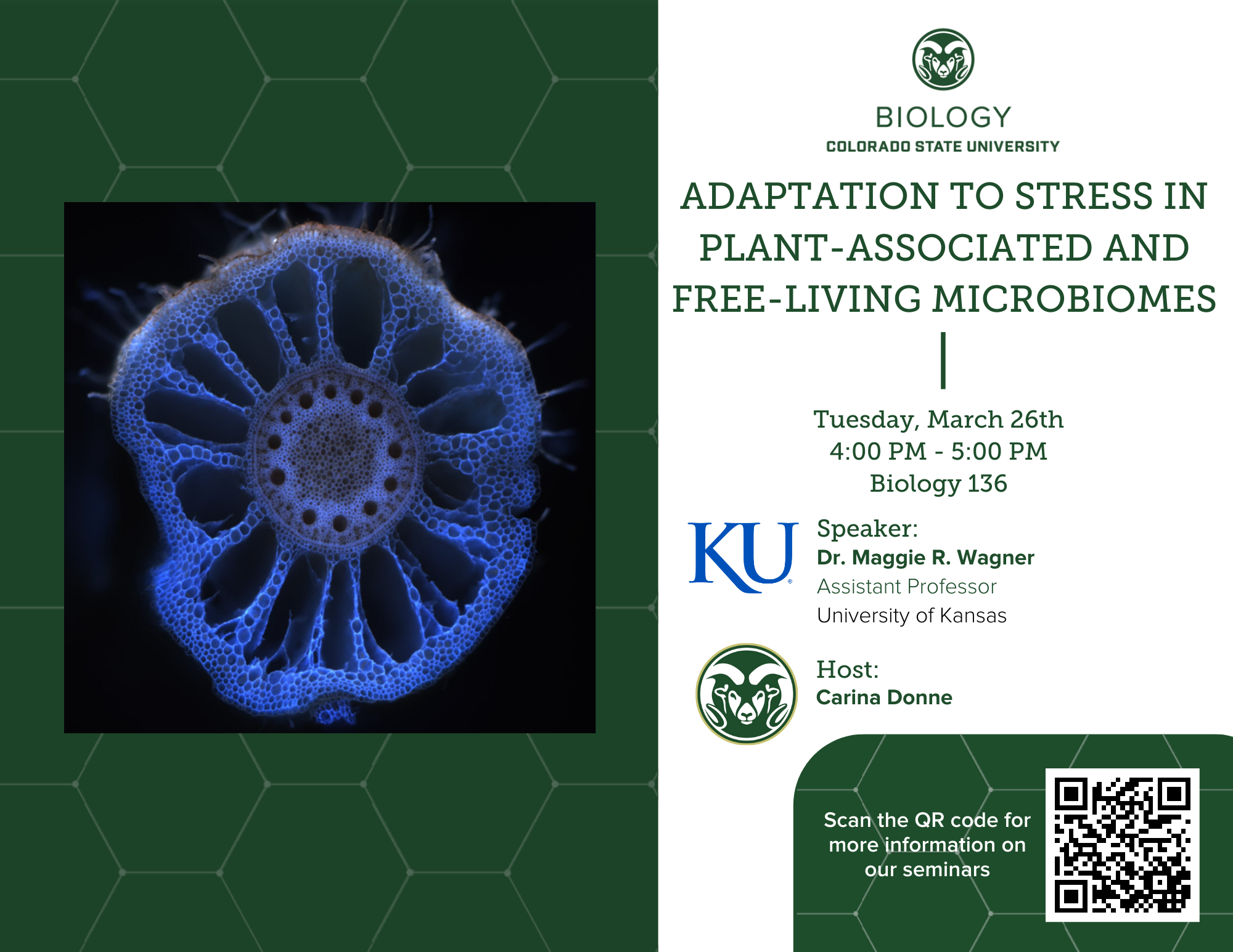
Within their shared environment, whether wild or agricultural, plants and their local soil-dwelling microbes often encounter the same abiotic stresses. This creates the a priori expectation that both plants and their associated microbiomes must adapt simultaneously to these stresses. However, we lack clear examples of how adaptation to a shared environmental stressor affects interactions between plants and microbial communities. We use drought as a model stressor to investigate these dynamics at the evolutionary, ecological, physiological, and molecular levels.
We collected wild soils from across a steep precipitation gradient and allowed them to adapt for five months to either intensified or relaxed drought conditions, with or without a host plant present, in a factorial design. Shotgun metagenome and metatranscriptome sequencing of these soils before and after the experi-mental evolution were used to identify microbial mechanisms of rapid adaptation to drought in host-associated and free-living contexts. Finally, the experimentally-evolved communities were used to inoculate a new generation of host plants, which acted as “phytometers” to measure the functional effects of microbiome adaptation on key plant physiological traits such as elemental composition and root anatomy.