Biology Research
Research Highlights
The Biology Confocal Core
Dr. Devin O’Connor and his lab introduce new technology to the department, the Biology Confocal Core, which will be available for use starting on January 1st, 2026!
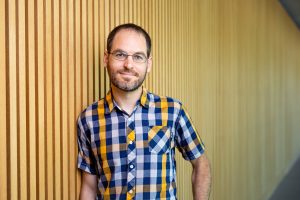
Learn more about Dr. Devin O’Connor, his lab, and the Biology Confocal Core by visiting the O’Connor Lab website.
So……what is a confocal again?
It’s a microscope that allows for detection and 3D reconstruction of fluorescent samples. We can observe and quantify our favorite molecules in living tissue! Confocal has become a cornerstone tool for modern molecular biology. Our confocal was designed for plant tissue, but it is broadly useful for diverse species and biological questions.
Why a core facility?
Microscopes are expensive and need regular care and feeding. CSU has a great model for shared microscopy services. The Microscopy Open Access Imaging network (MOAI) is a distributed core facility supported by individual labs, departments, and the VPR. It allows for individual labs to provide access to their scopes for minimal fees. These fees help support maintenance and training. Additional support via the VPR allows for larger maintenance or improvement purchases which are distributed by the MOAI board, on which Dr. Devin O’Connor participates.
Why do I have to pay for this service?
Usage fees support training, maintenance, and shared consumables. O’Connor lab tech/lab manger Sinead Cahill will support training and will be available for Ad-Hoc consultation for a minimal fee. Even the O’Connor lab will pay for use in order to keep the coffers full! Perhaps more importantly, running the instrument as a core will allow all of us to prove we have access to, and budget for, a Confocal on grant applications.
How do I sign up to use it?
Information is here. We are still working out some of the kinks for booking/info/billing etc, so feedback is welcome!
I just want to see this fancy laser thing in action for my general edification and to bask in the glory of the light, can I?
For sure! Email me, Dr. Devin O’Connor, and we will make sure we accommodate your schedule for our upcoming Open House! Stay tuned!
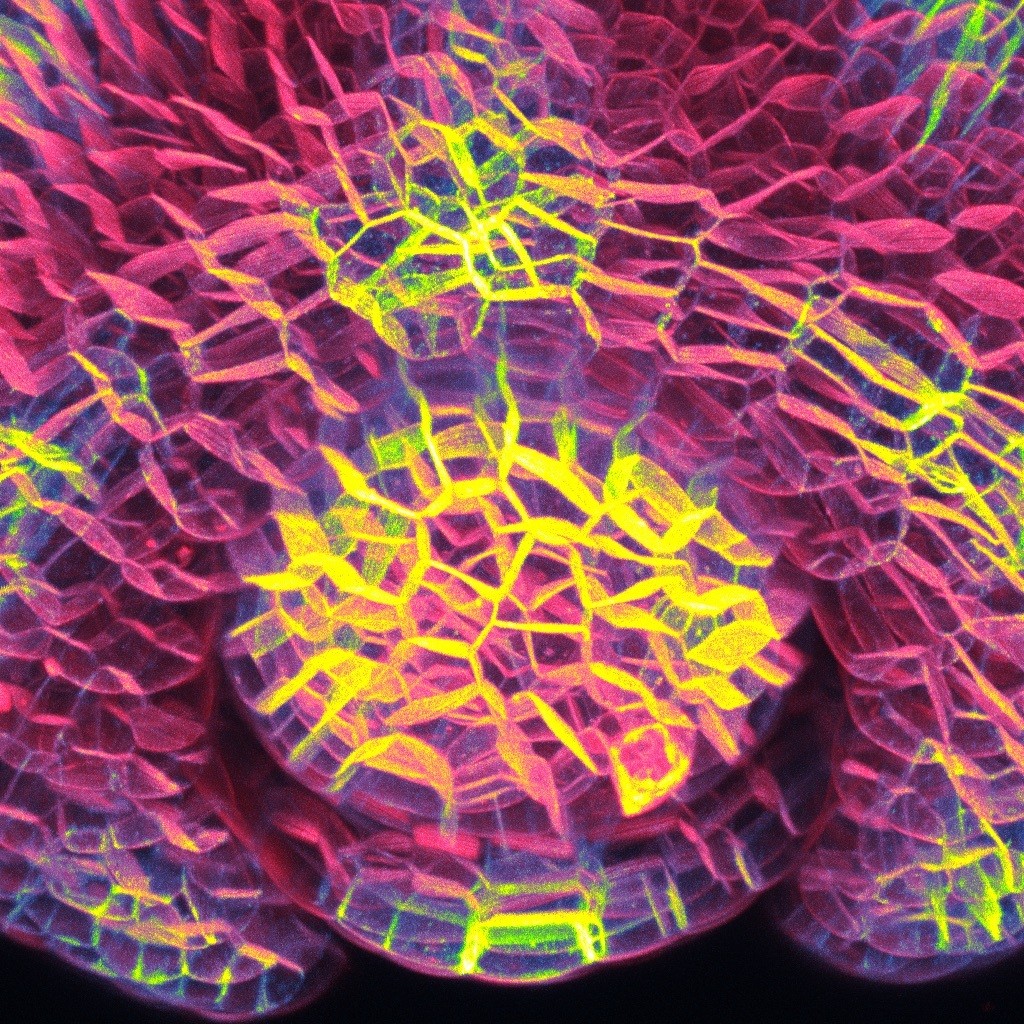
Image from the Biology Confocal Core of membrane hormone transporter localization in wee baby grass leaves. Courtesy of the O’Connor Lab in the Department of Biology.
Methane is odorless, colorless and invisible to the naked eye. But it’s also one of the most damaging greenhouse gases impacting climate change.
Colorado State University biology professor Joe von Fischer researches how humans, plants, soil and soil microbes influence greenhouse gas emissions, including methane. Today, we’re talking with von Fischer about how methane compares to the more notorious carbon dioxide, his research into ways we can better measure methane emissions, and why measuring and reducing methane is a critical opportunity in the climate fight.
Have you ever wondered how artic ground squirrels survive the harsh winters? Assistant Professor, Cory Williams, along with USDA Forest Service researcher with the Rocky Mountain Research Station, Helen Chmura, have been delving deep into the ecological and physiological aspects affecting changes in hibernation patterns for these little critters. Utilizing analyses from an extensive dataset including soil and body-hibernation temperatures, their research has shown that artic squirrels may be benefitting from milder winters allowing them to store less fat to survive the cold. Learn more about their fascinating research using the links below.
Science Research Article | The Source Article | Photos courtesy of The Williams Lab


Research Scientist, Anping Chen, collaborated on several papers contributing to the global study of soil carbon levels and climate change. In partnership with the Chinese Academy of Sciences and Australia’s Commonwealth Scientific and Industrial Research Organization, Chen’s work highlights a new report which shows the amount of inorganic carbon in soil may be under-accounted for in global climate models. In his papers, Chen delves into the complexities of this mineral-based carbon storage and investigates its role in carbon dioxide sequestration and emissions, along with examining the impact of lost carbon which could potentially exacerbate climate change.
Check out his publications below to learn more about this fascinating topic of research.
“Fertilizer Management for Global Ammonia Emission Reduction” | Nature
“Size, Distribution, and Vulnerability of the Global Soil Inorganic Carbon” | Science
“Consistent Time Allocation Fraction to Vegetation Green-up Versus Senescence Across Northern Ecosystems Despite Recent Climate Change” | Science Advances
“Integrating Ecosystem Water Demands into Drought Monitoring and Assessment under Climate Change” | Nature Water
“Climate-induced Tree Mortality Pulses are Obscured by Broad-scale and Long-term Greening” | Nature Ecology & Evolution


Coming Soon!
Change is a constant, so it’s no surprise our birds are evolving too! New research from Dr. Kristen Ruegg’s Ornithology Lab, with postdoctoral researcher Sheela Turbek leading the study, reveals a genome-level climate adaptation in the San Diego, CA, Southwestern Willow Flycatcher – a change that just might save this endangered species. Read the full SOURCE article here for more birding details!