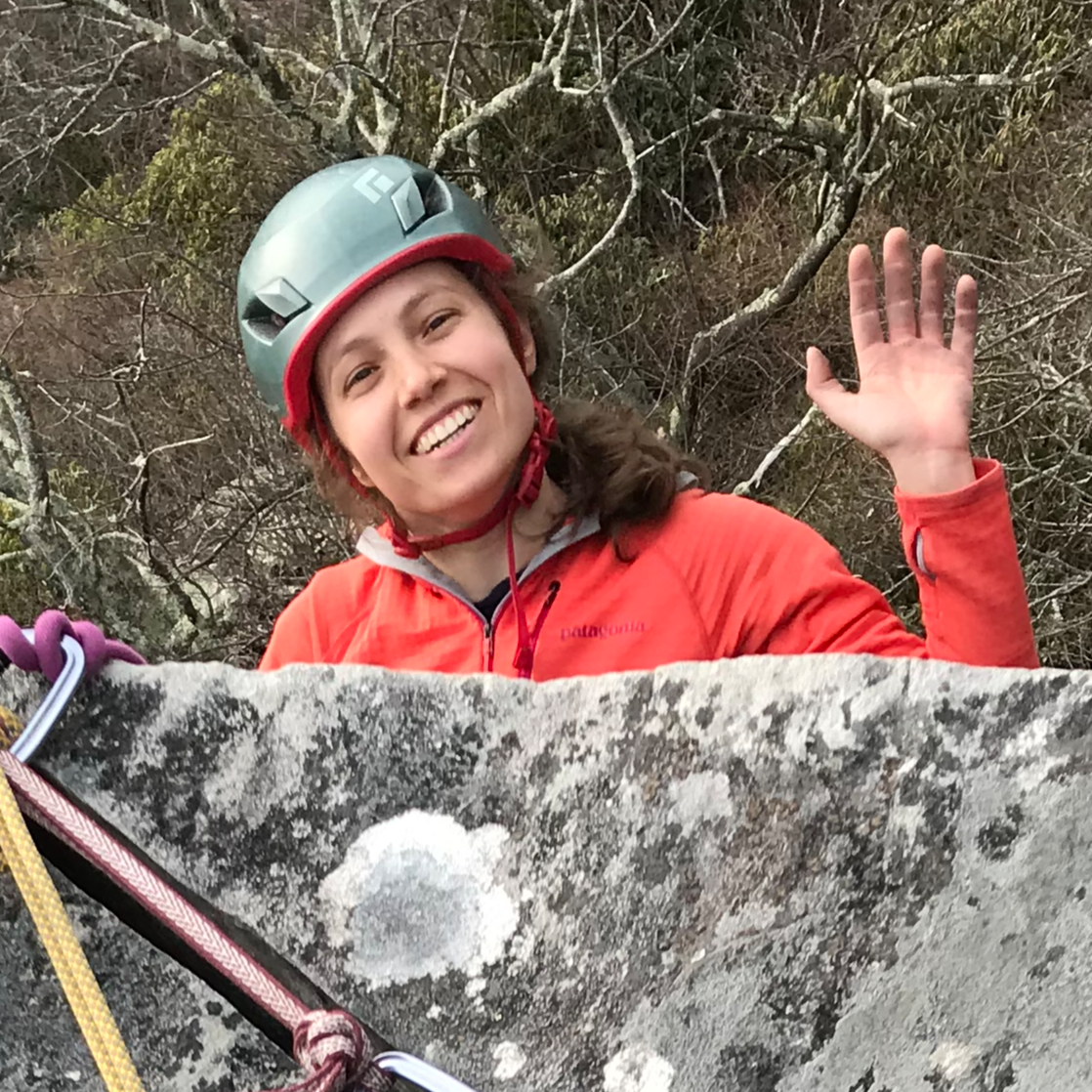
Dr. Andee Kaplan, Associate Professor of Statistics. Dr. Kaplan will present groundbreaking research on applying Bayesian hierarchical models to ecological data, addressing challenges in record linkage across overlapping datasets.
In this seminar, Dr. Kaplan will introduce innovative methods for linking ecological data sources when individual identities are unknown. Her work focuses on two fascinating applications: estimating sea otter abundance using overlapping aerial images in Glacier Bay, Alaska, and modeling growth-size curves for conifer species using overlapping LiDAR scans in the Upper Gunnison Watershed. These approaches provide valuable insights into ecological inference, including the effects of topographic covariates on conifer growth in the Southern Rocky Mountains.
Event Details:
Speaker: Dr. Andee Kaplan
Title: A Bayesian Approach to Linking Ecological Data
Date: Tuesday, April 28th, 2026
Time: 4:00 PM
Location: BIO 136
Hosted by Kim Hoke, Professor, CSU Department of Biology
Light refreshments while supplies last.
Visit our website for more information on our seminars and follow us on social media for more announcements from Biology.
-
Instagram: @csubio
-
Twitter/X: @csubiology
We look forward to seeing you there!
Abstract
“It has become increasingly common for data containing records about overlapping individuals to be distributed across multiple sources, making it necessary to identify which records refer to the same individual. The goal of record linkage is to estimate this unknown structure in the absence of a unique identifiable attribute. While this task is commonly used to link social science and official statistics data, it can also be useful to link overlapping ecological data sets. We introduce a Bayesian hierarchical record linkage model motivated by two tasks in ecological inference using overlapping aerial data sources. The first is a hierarchical framework to achieve abundance estimation using overlapping aerial images of sea otters in Glacier Bay, Alaska in which the individuals can occur in multiple images. The second is a two-stage approach to estimate individual growth-size curves for conifer species using overlapping LiDAR scans of the Upper Gunnison Watershed, which allows assessment of the impact of key topographic covariates on the growth behavior of conifer species in the Southern Rocky Mountains (USA). In both scenarios, we have overlapping individuals with unknown identity and a record linkage model is introduced to facilitate large scale inference.”