Speaker
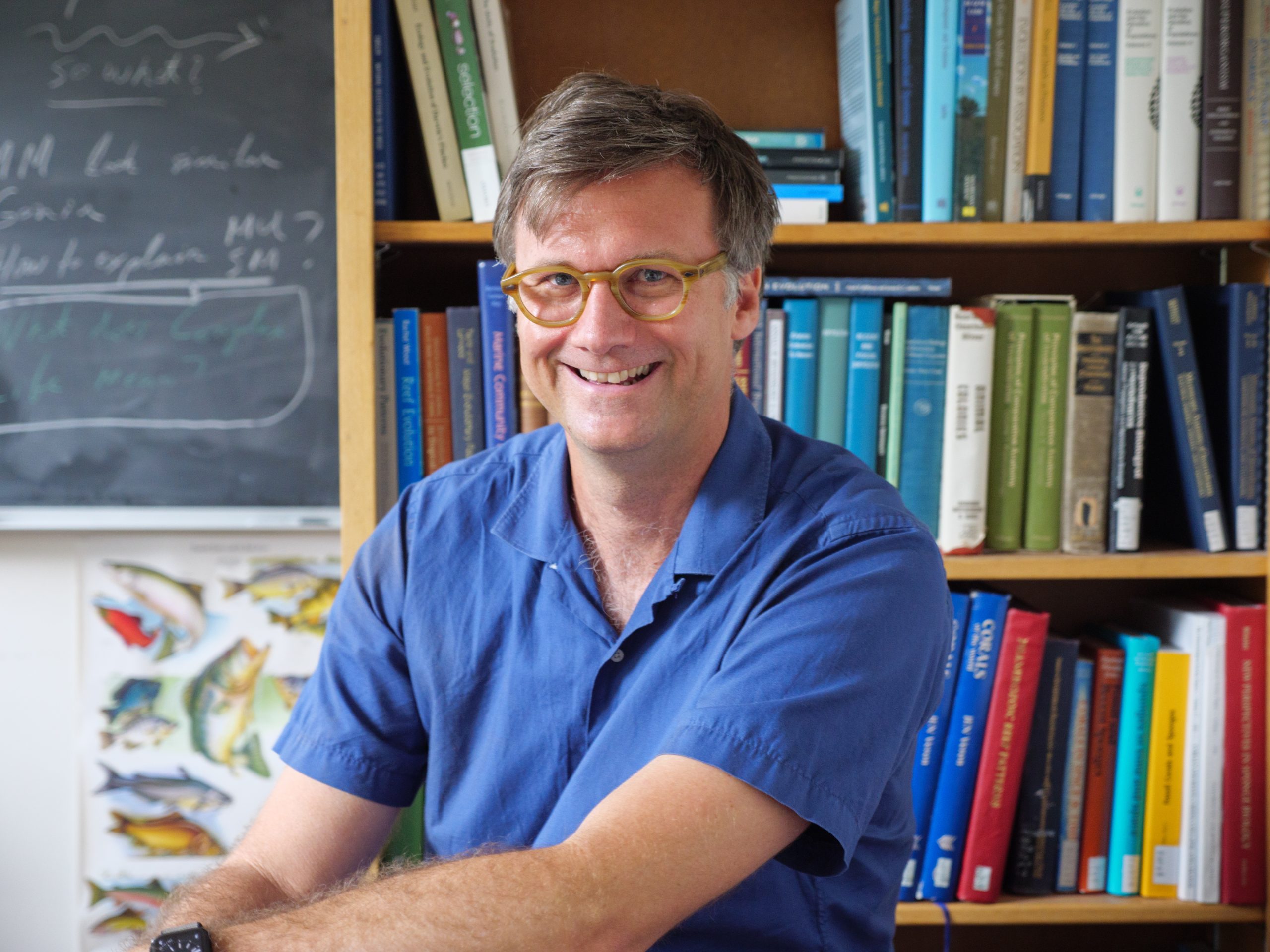
Dr. Carl Simpson
Speaker's Institution
University of Colorado, Boulder
Date
2026-09-15
Time
4:00PM
Location
Biology 136
Mixer Time
Mixer Time
Calendar (ICS) Event
Additional Information
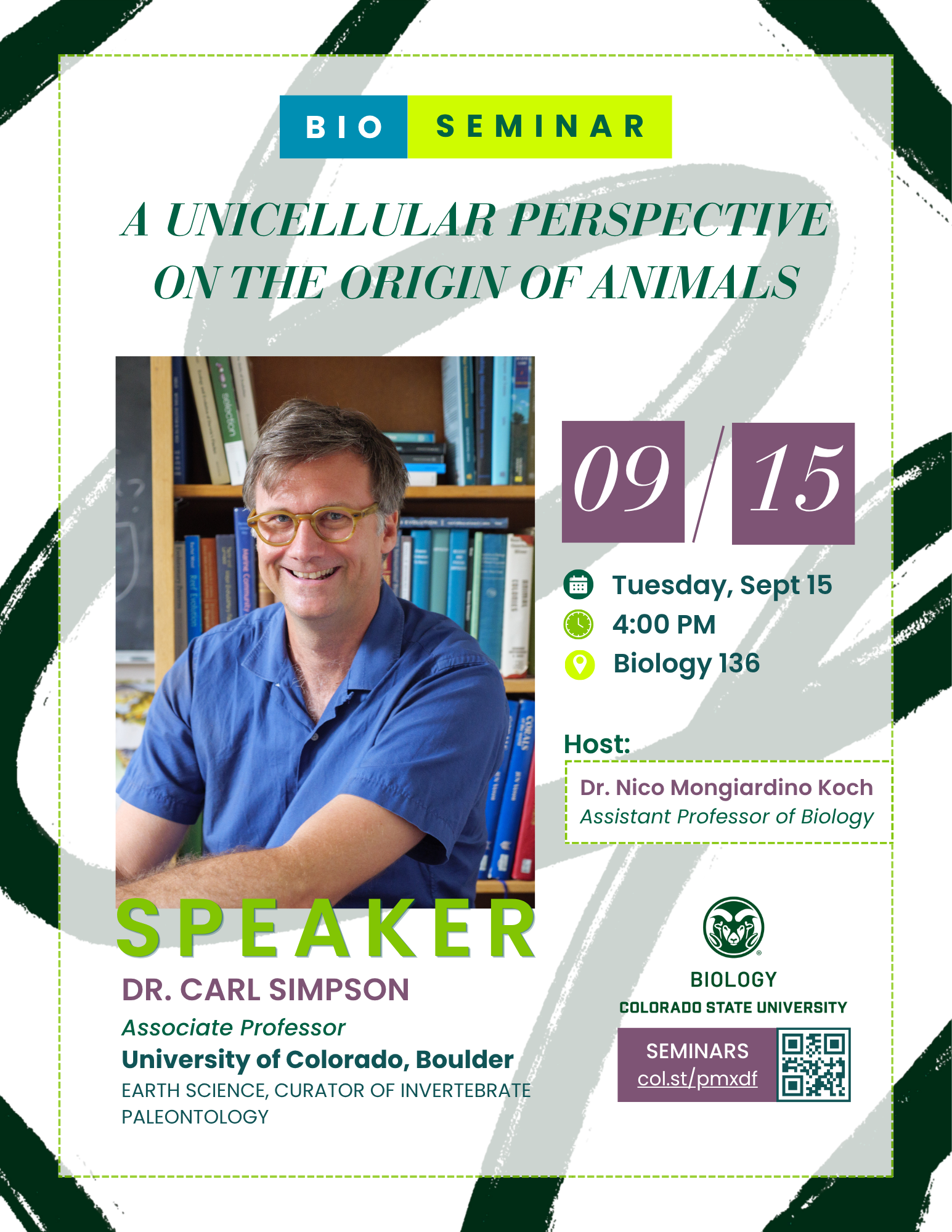
The Department of Biology is pleased to welcome Dr. Carl Simpson, Associate Professor of Earth Science at the University of Colorado, Boulder and Curator of Invertebrate Paleontology, for an upcoming BIO Seminar.
Dr. Simpson will present “A Unicellular Perspective on the Origin of Animals,” a talk that explores animal origins through the lens of unicellular life and evolutionary biology.
Event Details
Speaker: Dr. Carl Simpson
Title: A Unicellular Perspective on the Origin of Animals
Date: Tuesday, September 15
Time: 4:00 PM
Location: Biology 136
Hosted by Dr. Nico Mongiardino Koch, Assistant Professor of Biology
Light refreshments while supplies last.
We invite students, faculty, and staff to join us for this thought-provoking seminar.
Visit our website for more information on our seminars and follow us on social media for more announcements from Biology.
-
Instagram: @csubio
-
Twitter/X: @csubiology
Abstract
Metazoans appear to have evolved and diversified during an ~200 million year window (around 800–600 mya) during the Neoproterozoic Era. At this time, much of the Earth system was in flux – it included 70 million years of the global Snowball Earth glaciations, massive global erosion, and the rise of atmospheric oxygen, all of which have been proposed to be the cause the origin of animals. But we do not know if any of these earth system changes were important for their origin. What we do know is that the ecological changes that come with animal multicellularity are due to the shift in the dominant physics that the organisms experience, even if we have yet to fully understand the shift. An experimental approach trying to evolve unicellular animal relatives into large and organized multicellular forms may help identify what was important for the origins of animals. Using the choanoflagellate Salpingoeca rosetta, we show that high seawater viscosity leads to the evolution of large motile colonies and provide a general mechanistic theory for why selection for multicellularity occurs.