Department of Biology Resources + Information: biology.colostate.edu/resources-guidelines/
Events, Dates, + Deadlines: biology.colostate.edu/dates-deadlines/
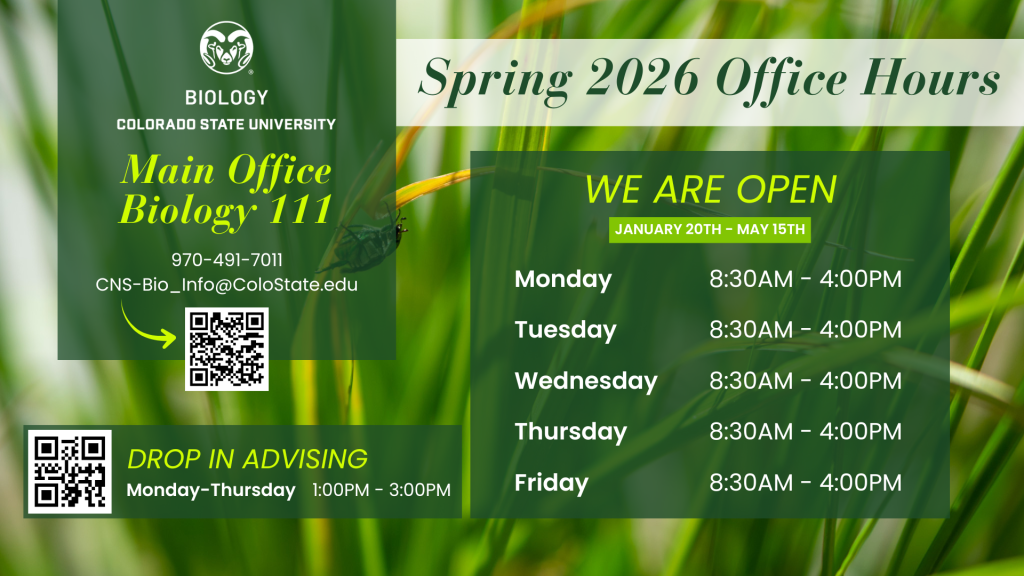
Main Office Contact Information: Monday – Friday | 7:30am – 4:30pm | CNS-Bio_Info@colostate.edu | 970-491-7011
Spring 2026 Office Hours: January 5th – May 15th | Monday – Friday | 8:30am – 4:00pm
Spring 2026 ASC Drop In Hours: January 26th – May 15th | Monday – Thursday | 1:00pm – 3:00pm
The Main Office is closed for commencement events on Friday, May 15th. We will reopen at 8:30am on Monday, May 18th.
Welcome to the
Department of Biology at Colorado State University
Our internationally-recognized research and education programs focus on organisms, diving into mechanistic detail about how they work, or stepping back to consider how they interact with each other and with their environment. From cells to the biosphere, we make discoveries about fundamental questions in Biology, and we use this new knowledge to make the world a better place. CSU Biology is a place where everyone is welcome to indulge their curiosity about the living world.
Office Hours
Student Highlights
Marissa Martinez’s stay-curious energy earned her a feature in @natgeotv’s new show, “Science Fair: The Series,” and propelled her all the way to the International Science and Engineering Fair, securing her a full-ride scholarship through the @boettcherfdn to study biology right here at @CSUNaturalSciences 📚🥼
Catch #ScienceFairTheSeries on @hulu and @disneyplus, out now 📺 👀
“Biology graduate student promotes importance of self in lab”
by Allie Ruckman, featuring Mel Morado

“Recognizing and addressing oppression in the sciences”
by Allie Ruckman, featuring Marina Rodriguez, Amir Alayoubi, and Beth Wittmann

“Q&A with Boettcher Scholar and International Science and Engineering Fair participant”
by Allie Ruckman, featuring Marissa Martinez

“Amphibian Week Highlights Critical Conservation Research at CSU”
by Elizabeth Rylance, featuring grad student, Katherine Stroh, & Biology professors, Chris Funk, and Rachel Mueller

Program Highlights
The Biology Teaching Collections
The Department of Biology houses the Biology Teaching Collections. The program maintains a large collection of specimens that we use in our classes. There are over 13,000 specimens, including birds, mammals, reptiles, amphibians, representatives of most invertebrate groups, and plants of all kinds. This collection has been an important part of instruction for the past century and is being reorganized to help better serve this purpose through volunteers.
Interested in volunteering or seeing the collections? Contact Tanya Dewey (tdewey@rams.colostate.edu) or Jennifer Brady (jbrady94@rams.colostate.edu) for more information on getting involved. This program showcases the amazing volunteers, graduate students and professors who are part of keeping this collection thriving. Joining as a volunteer includes learning what we do to keep this place running while also discussing what the collections are all about.
Video Credits
Music: Summer Somewhere In Cuba | Artist: Cumbia Deli | Videography: CSU Natural Sciences | YouTube: col.st/Ywk5i
Course Highlights

Course Snapshots
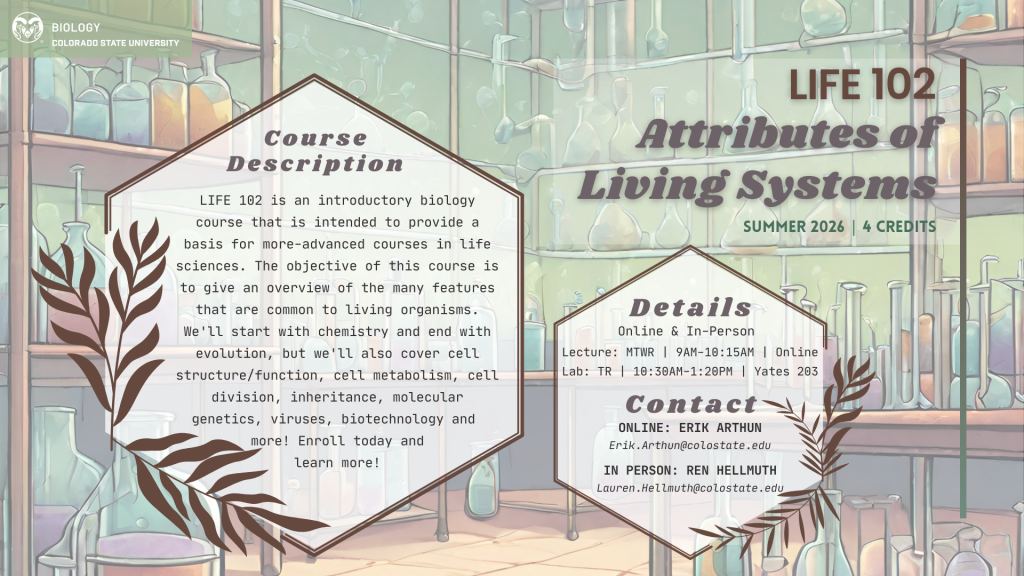
LIFE 102 – Attributes of Living Systems
This course is an introductory biology course that works well for both incoming Freshmen and outgoing Seniors. It not only provides a basis for more-advanced courses in life sciences, but also serves as an effective review for more-advanced students.
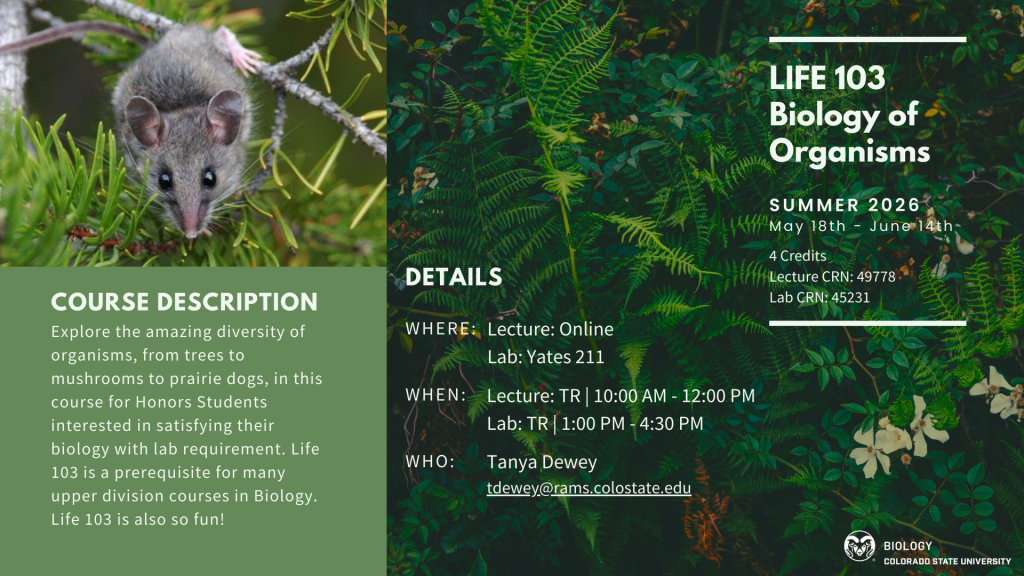
LIFE 103 – Biology of Organisms
This course introduces students to the incredible diversity of life, from microbes to mammals. It’s a great fit for anyone needing a solid foundation in organismal biology, whether you’re just starting out or preparing for upper‑division biology courses. Students explore how organisms function, adapt, and interact with their environments through both lecture and hands‑on lab work.
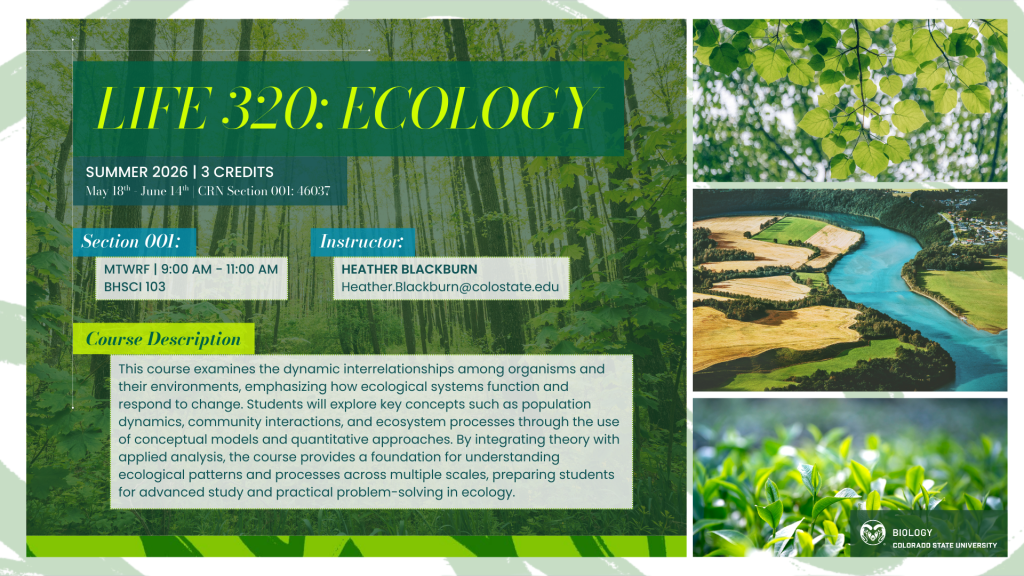
LIFE 320 – Ecology
This course offers a deep look at how organisms interact with each other and their environments, making it ideal for students interested in environmental science, conservation, or biological research. Through key ecological concepts and real‑world examples, students gain the tools to understand and analyze ecological patterns across multiple scales. It’s a strong next step after introductory biology courses for anyone wanting a more integrated view of the natural world.
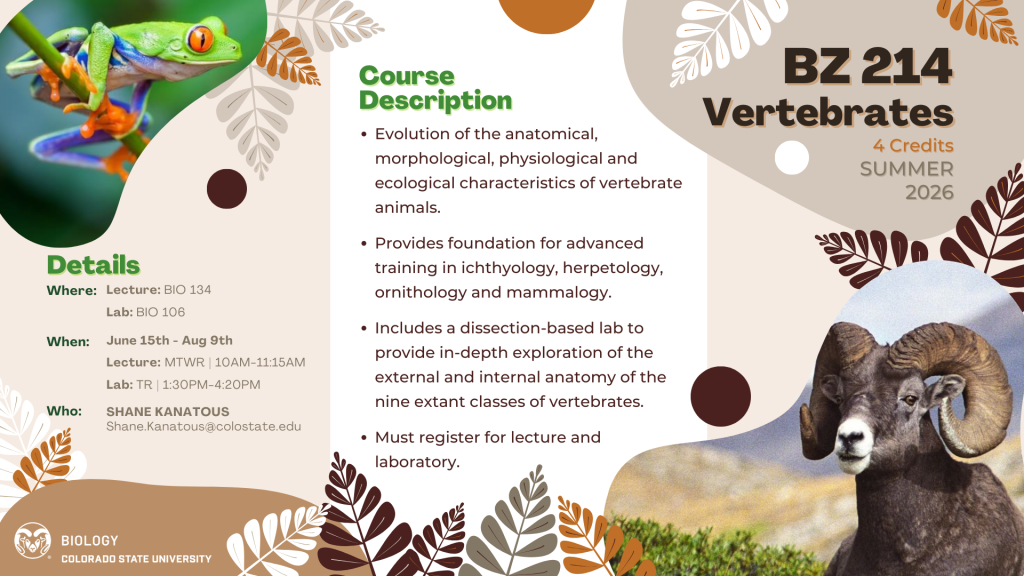
BZ214 – Vertebrates
Gain insight into the evolution of anatomical, physiological, and ecological traits in vertebrate animals. The course features a dissection-based lab and serves as a foundation for advanced training in ichthyology, herpetology, ornithology, and mammalogy.
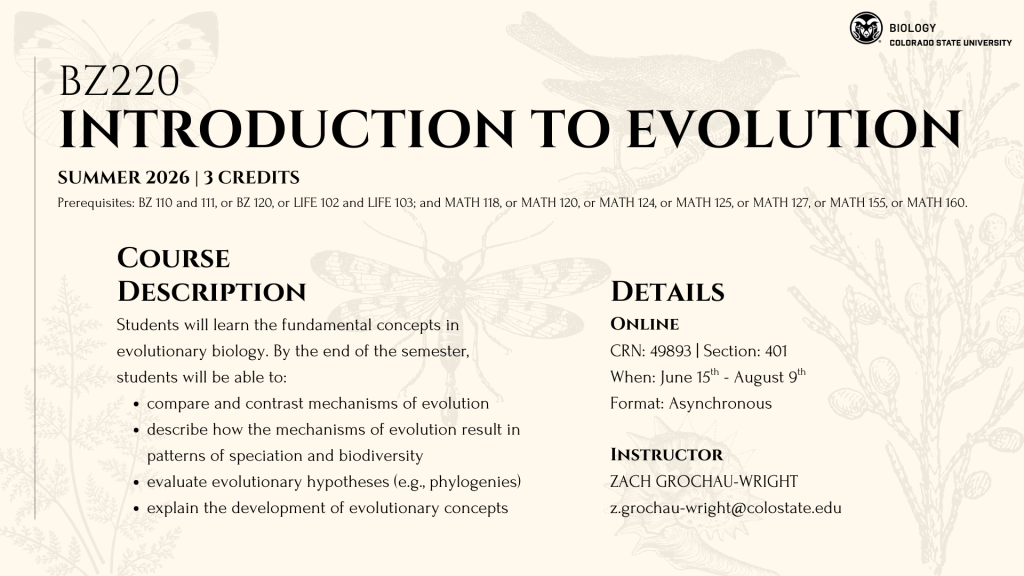
BZ220 – Introduction to Evolution
Students will explore fundamental concepts in evolutionary biology, including mechanisms of evolution, patterns of speciation, and biodiversity. The course provides a strong foundation for advanced studies in biology or ecology.
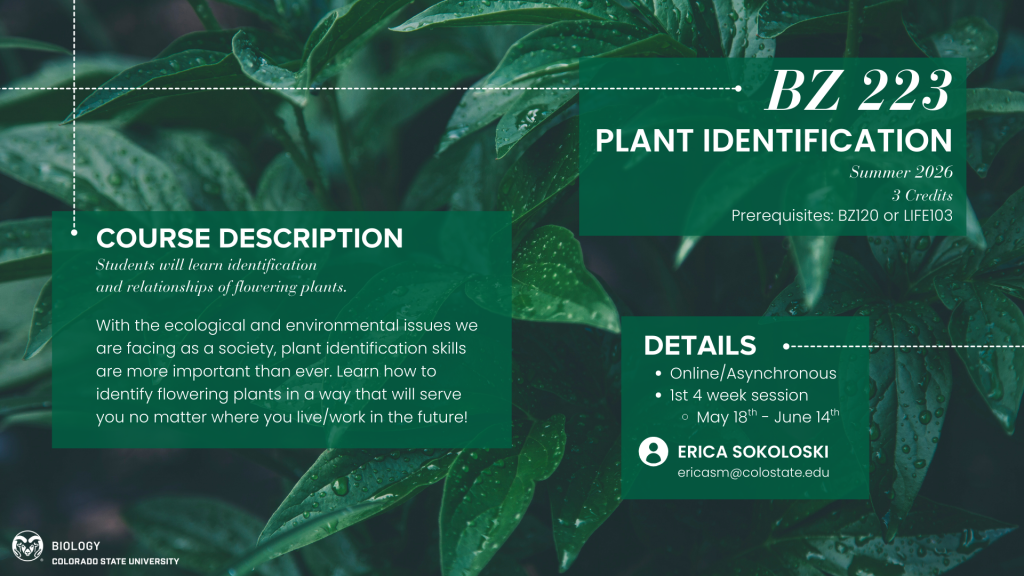
BZ223 – Plant Identification
With the ecological and environmental issues we are facing as a society, plant Identification skills are more important than ever. Learn how to identify flowering plants in a way that will serve you no matter where you live/work in the future!
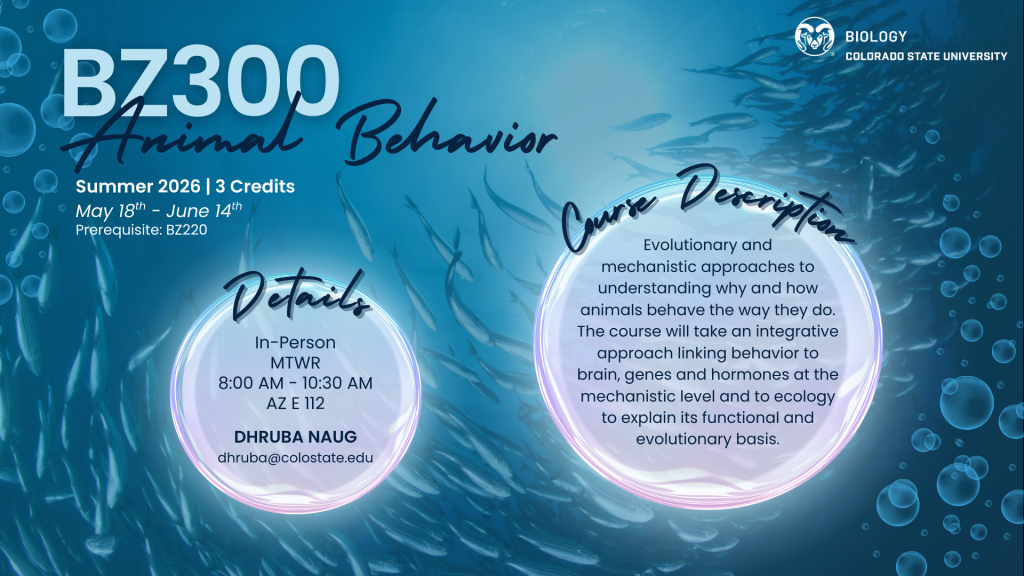
BZ300 – Animal Behavior
Explore the fascinating world of animal behavior through evolutionary and mechanistic approaches. Investigate how and why animals behave as they do, linking behavior to brain function, genetics, hormones, and ecology. This integrative course provides a strong foundation for understanding the functional and evolutionary basis of behavior.
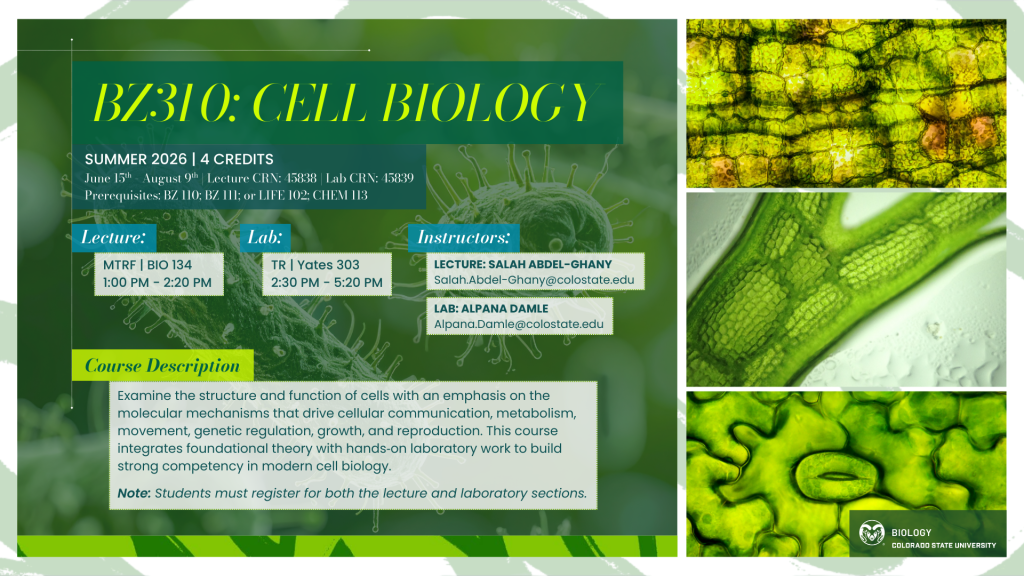
BZ310 – Cell Biology
Dive into the structure and function of cells, with an emphasis on molecular mechanisms driving communication, metabolism, and genetic regulation. Foundational theory and hands-on laboratory work prepare students for advanced studies in modern cell biology.
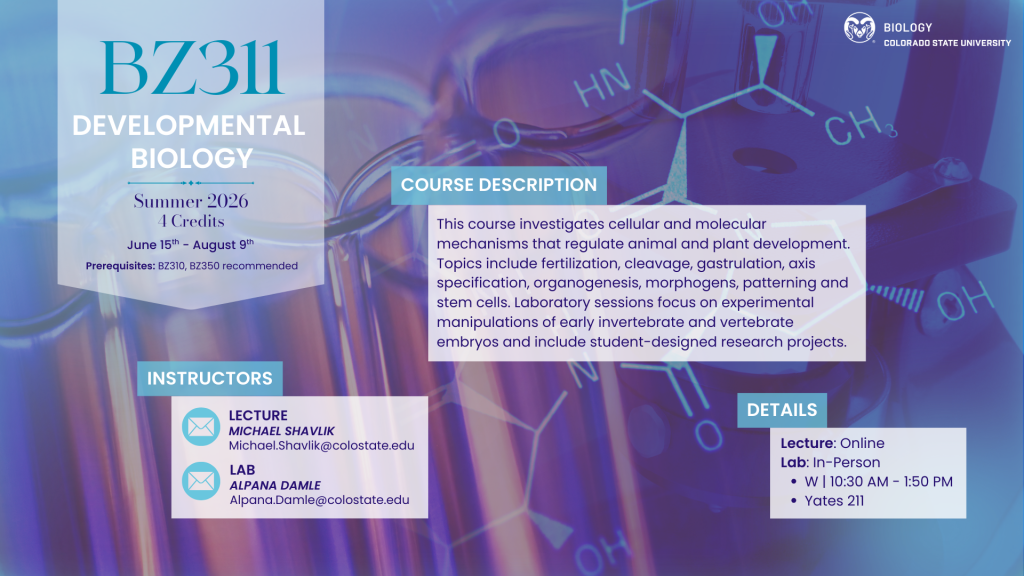
BZ311 – Developmental Biology
The details of life are important. Join us in developmental biology, where we discuss how organisms form.
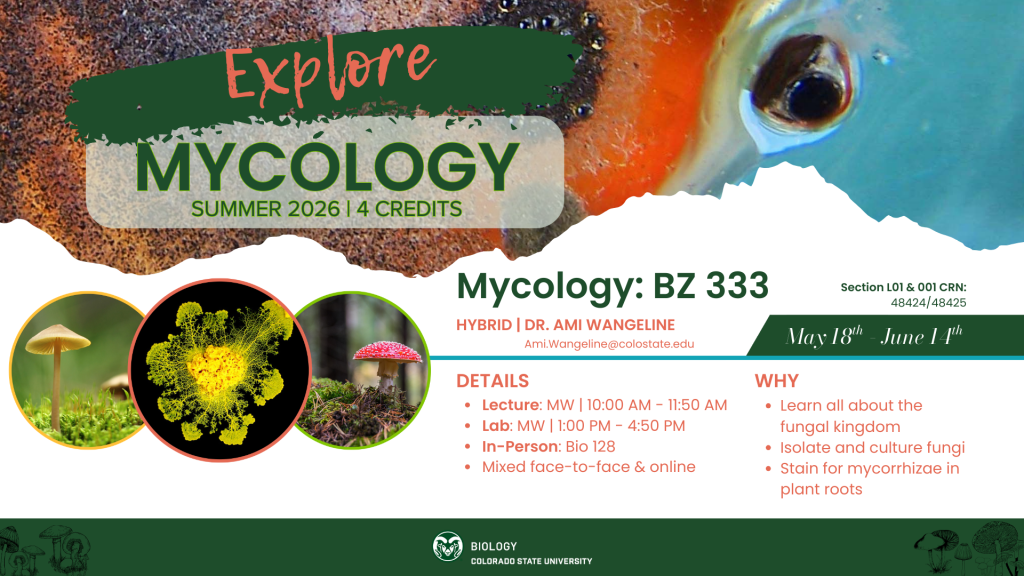
BZ333 – Mycology
Dive into the fascinating world of fungi! Students will explore the diversity, ecology, and evolution of the fungal kingdom. Learn to isolate and culture fungi, stain mycorrhizae in plant roots, and uncover the critical roles fungi play in ecosystems. This hybrid course combines hands-on lab work and engaging lectures to provide a comprehensive understanding of mycology.
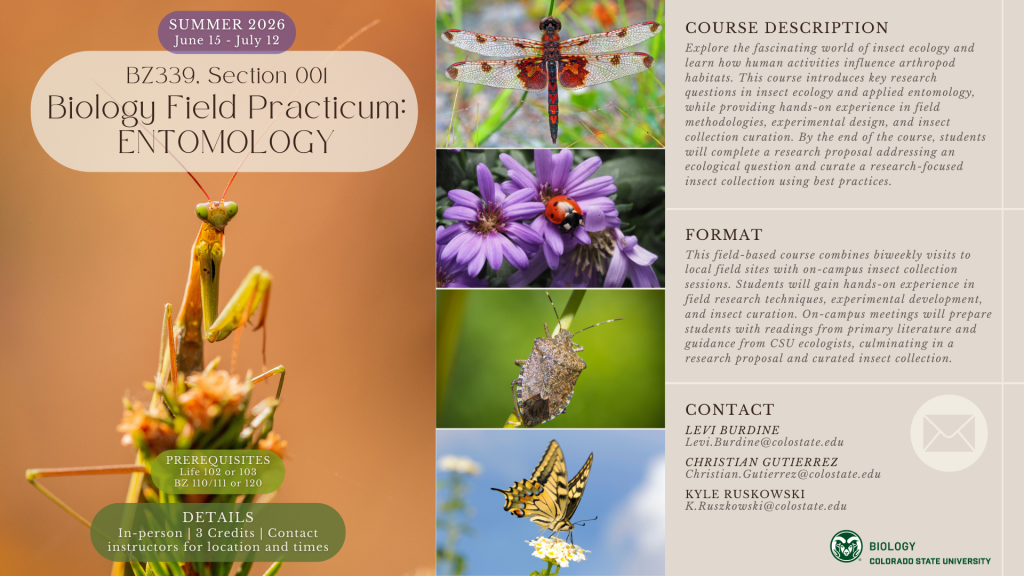
BZ339.001 – Biology Field Practicum: Entomology
Discover the incredible diversity of insect life through hands-on learning! This field-based course combines classroom instruction with biweekly visits to local field sites, where students will study insect ecology, experimental design, and insect collection curation. By the end of the course, students will develop a research proposal and curate their own insect collection. Ideal for students interested in entomology, ecology, or field research, this course provides the skills and experience needed to explore the role of insects in ecosystems.
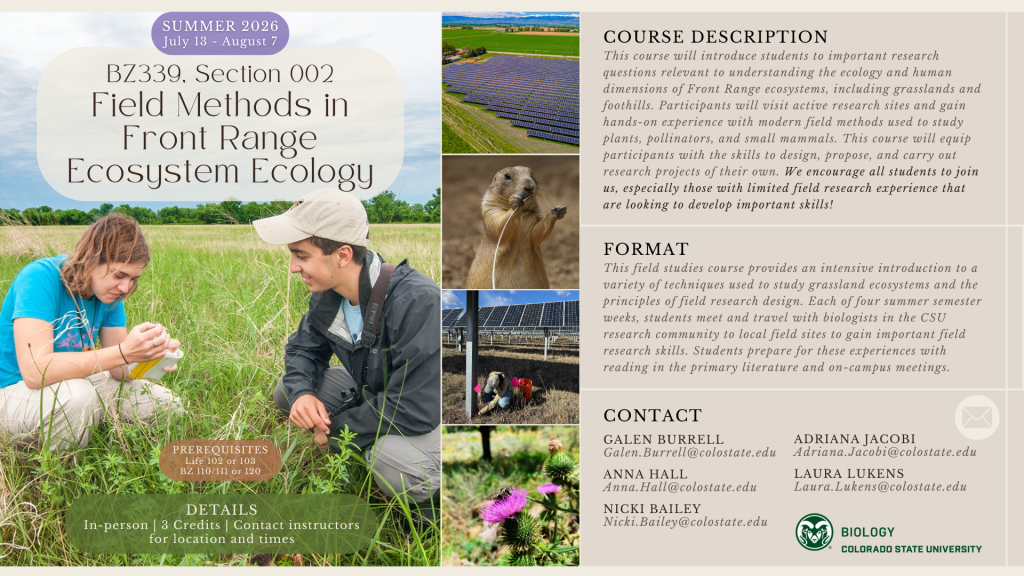
BZ339.002 – Field Methods in Front Range Ecosystem Ecology
Immerse yourself in the study of grassland and foothill ecosystems! This field studies course introduces students to critical research techniques, including field methodologies, experimental design, and data collection. Participants will visit active research sites and work alongside CSU ecologists to design and implement their own research projects. Ideal for students interested in ecology, conservation, or field research, this course provides hands-on experience and prepares students for advanced studies in ecosystem science.
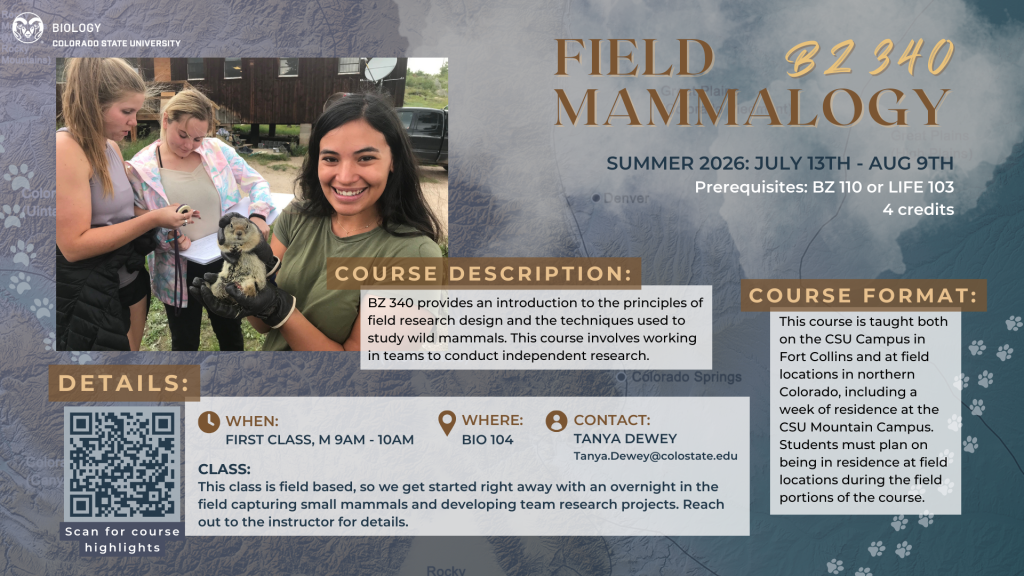
BZ340 – Field Mammalogy
Immerse yourself in the study of wild mammals, where students will learn field research techniques and explore mammalian ecology. This course includes hands-on research, team-based projects, and a week-long residency at the CSU Mountain Campus. Perfect for students passionate about wildlife and fieldwork, this course offers a unique opportunity to study mammals in their natural habitats.
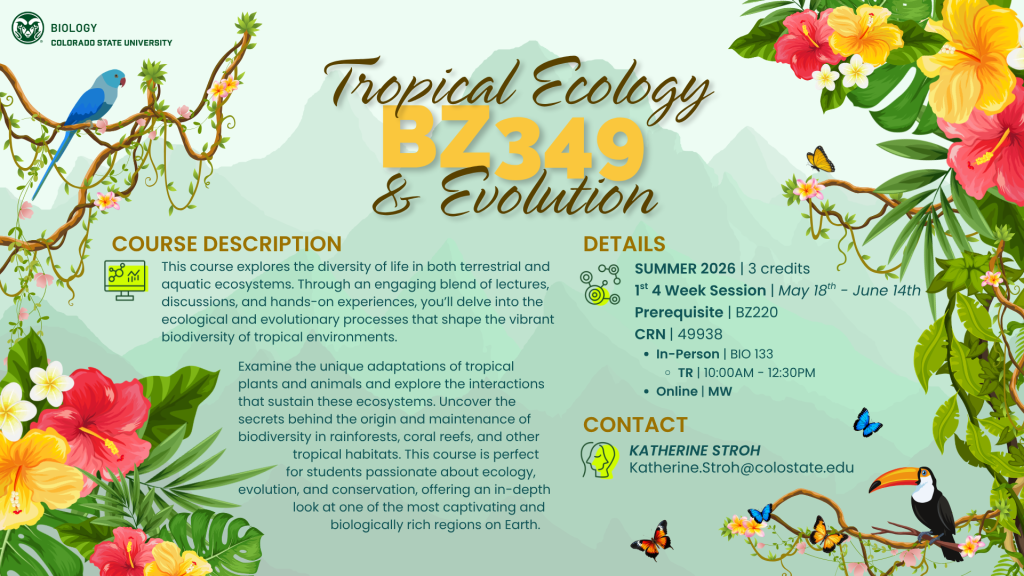
BZ349 – Tropical Ecology & Evolution
Discover the vibrant biodiversity of tropical ecosystems in this engaging course that explores terrestrial, freshwater, and marine environments. Learn how ecological and evolutionary processes generate and sustain tropical diversity while comparing it to temperate patterns. Students will gain insight into key ecological concepts, defining features of tropical flora and fauna, and the socio-political history of tropical research, all while addressing critical environmental challenges and the global importance of tropical ecosystems for sustainability.
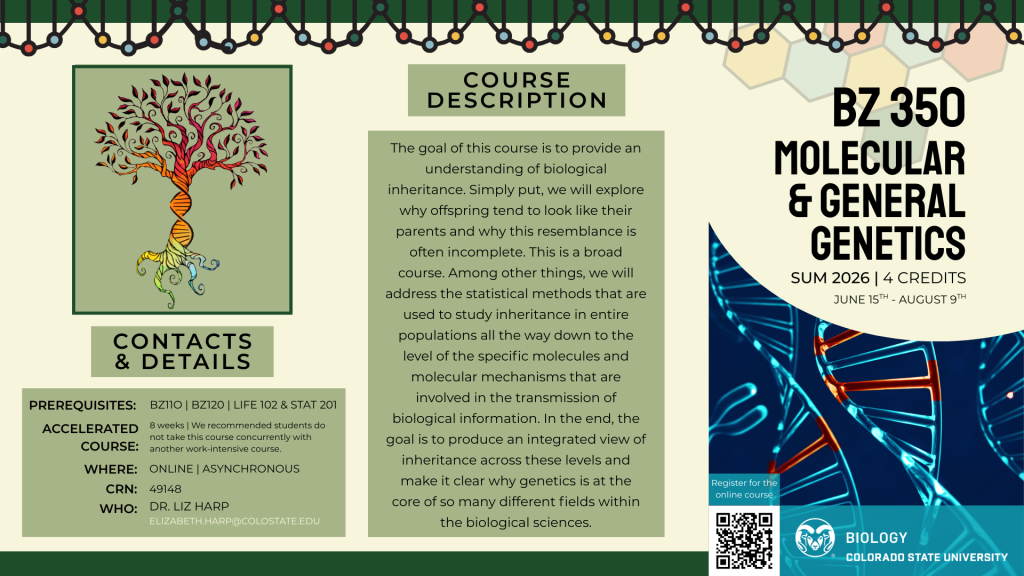
BZ350-401 – Molecular & General Genetics
Explore how genetic information is transmitted across generations, why offspring resemble their parents, and why these resemblances are not always complete. Because this course is online and asynchronous, it is a great option for students who have a summer job or internship and can’t take an in person class.
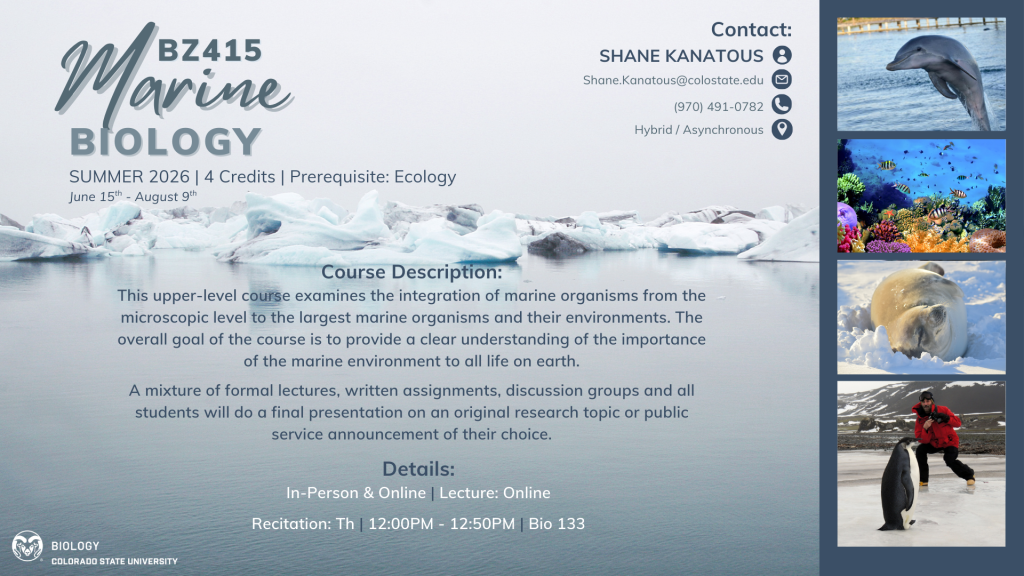
BZ415 – Marine Biology
Explore the vast diversity of marine life, from microscopic organisms to the largest creatures in the ocean. This upper-level course examines the relationships between marine organisms and their environments, highlighting the importance of marine ecosystems to life on Earth. Students will engage in lectures, discussions, and a final research or public service presentation in this hybrid course.
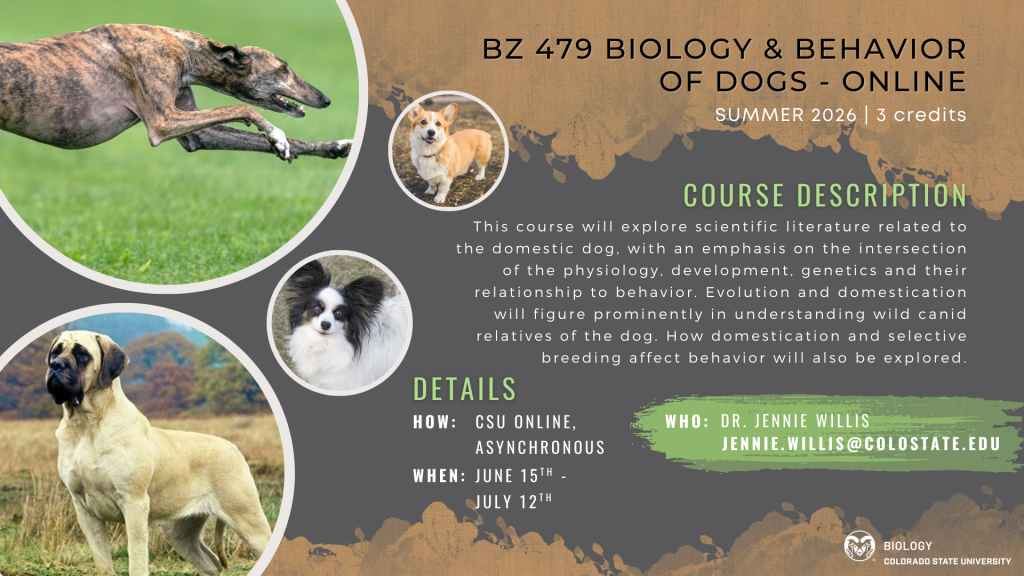
BZ479 – Biology and Behavior of Dogs
Investigate the biology and behavior of domestic dogs in this online course. Examine scientific literature on dog physiology, development, genetics, and behavior, focusing on the evolutionary and domestication processes that shape canine traits. Learn about the impact of selective breeding and gain insight into the relationship between humans and dogs. Perfect for students interested in animal behavior, evolutionary biology, or veterinary science, this course is offered in an asynchronous, online format for flexible learning.


Course Snapshots
LIFE 102 – Attributes of Living Systems
This course is an introductory biology course that works well for both incoming Freshmen and outgoing Seniors. It not only provides a basis for more-advanced courses in life sciences, but also serves as an effective review for more-advanced students.
BZ111 – Animal Biology Lab
BZ220 – Introduction to Evolution
NEW Online! Learn how to communicate science to your friends, family, and the wider society in ways that make it feel exciting and important.
BZ223 – Plant Identification
With the ecological and environmental issues we are facing as a society, plant Identification skills are more important than ever. Learn how to identify flowering plants in a way that will serve you no matter where you live/work in the future!
BZ300 – Animal Behavior
For anyone interested in understanding how and why animals do what they do!
BZ572 – Phytoremediation
Our planet faces numerous environmental risks stemming from industrial development, including mining, gas emissions, chemical fertilizers, pesticide applications, and municipal waste generation. The accumulation of these contaminants in soil, water, and air harms plants, animals, humans, and the environment. Various strategies, such as chemical-based, physicochemical, and biological methods, have been employed to remediate these pollutants. Among these, the biological methods, especially phytoremediation, are the most accepted strategy because they are energy efficient, cost-effective, and eco-friendly. It is important to understand the sources of different pollutants and how we can reduce their accumulation at both the generation and decontamination levels. In this course, we will cover the different types of pollutants and their sources, the various strategies to remediate them, and the pros and cons of each approach with emphasis on bioremediation. This limited seats, 3-credit course will provide each student with the opportunity to practice searching databases, preparing reports or reviews, creating presentations, presenting to a group, and participating in scientific discussions in addition to acquiring knowledge about the course subject. Graduate and undergraduate students from biology, horticulture, soil and crop science, forestry, ecology, chemistry, and engineering will benefit from this course.
Course Snapshots
Check back for more details.


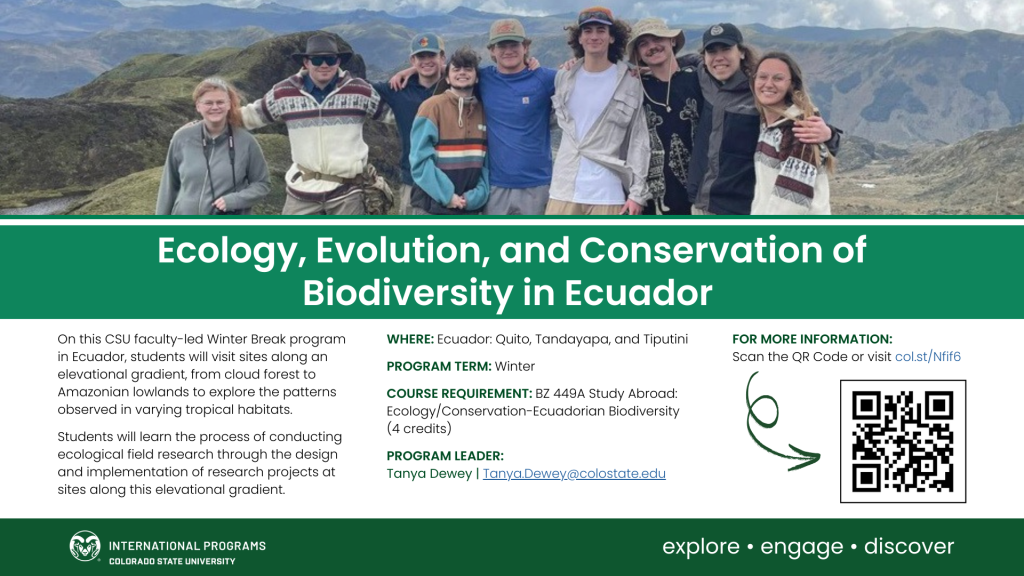
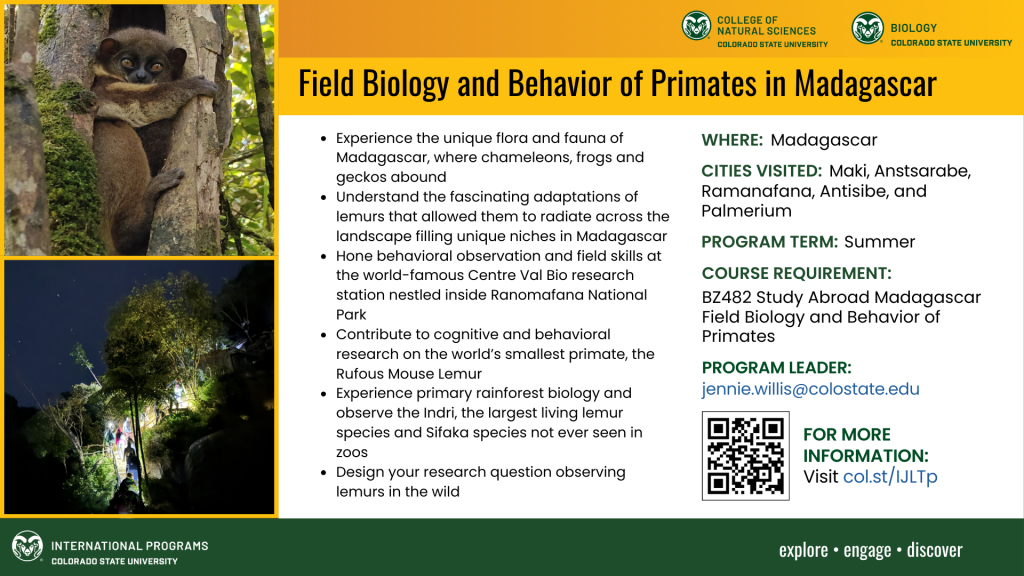


Our Education Abroad programs are as diverse as they are enticing! Check out our programs and learn more about these incredible opportunities here: CSU | Education Abroad | Recommended CNS Programs Abroad
Learn more about CSU’s Education Abroad Programs here: CSU | Education Abroad
Speak with an advisor to see if these programs are right for you!: CSU | Biology | Advising
Application Deadlines
Behavior and Biology of African Mammals in Kenya: Summer Break – APPLY
- Early Deadline: December 1st
- Final Deadline: December 15th
Dolphin Behavior & Physiology in Honduras: Winter & Summer Break – APPLY
-
Winter
- Priority Deadline: May 1st
- Final Deadline: September 15th
-
Summer
- Priority Deadline: December 1st
- Final Deadline: February 1st
Ecology, Evolution, & Conservation of Biodiversity in Ecuador: Winter Break – APPLY
- Priority Deadline: May 1st
- Final Deadline: September 15th
Field Biology & Behavior of Primates in Madagascar: Summer Break – APPLY
- Priority Deadline: December 1st
- Final Deadline: February 1st
First Year Seminar Abroad: Biology in Australia: August – APPLY
- Priority Deadline: April 1st
- Final Deadline: May 4th
Marine Biology in Mexico: Fall Break – APPLY
- Early Deadline: March 1st
- Final Deadline: April 15th
Class Highlights
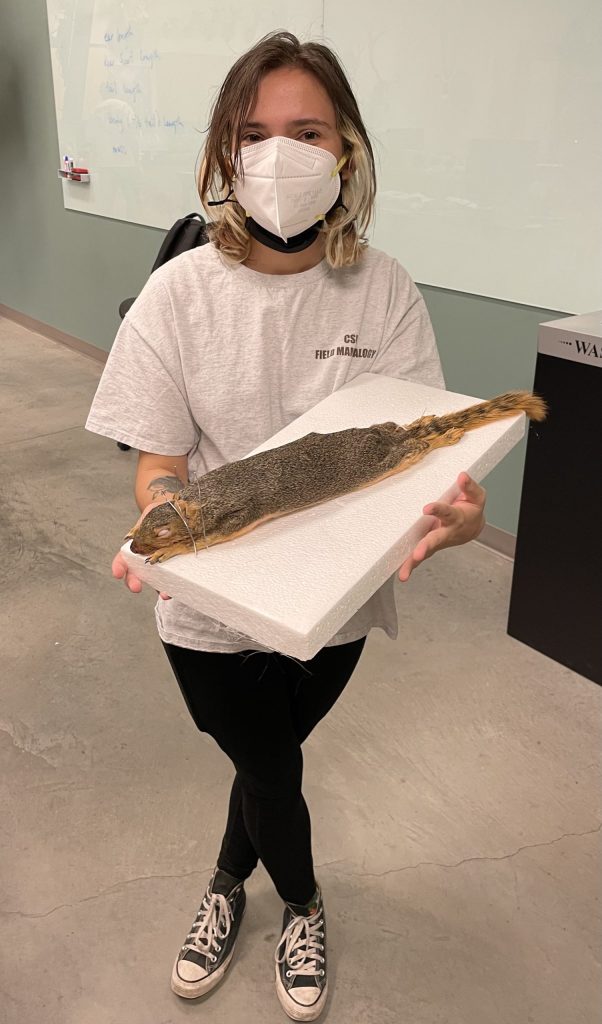
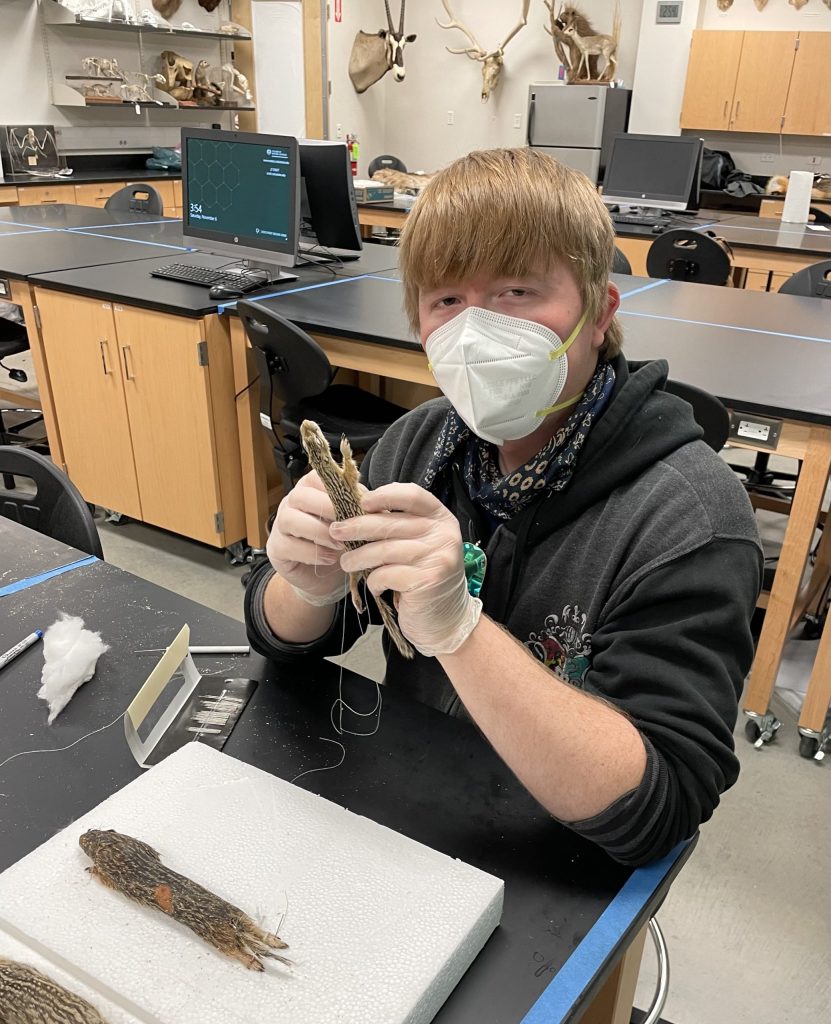
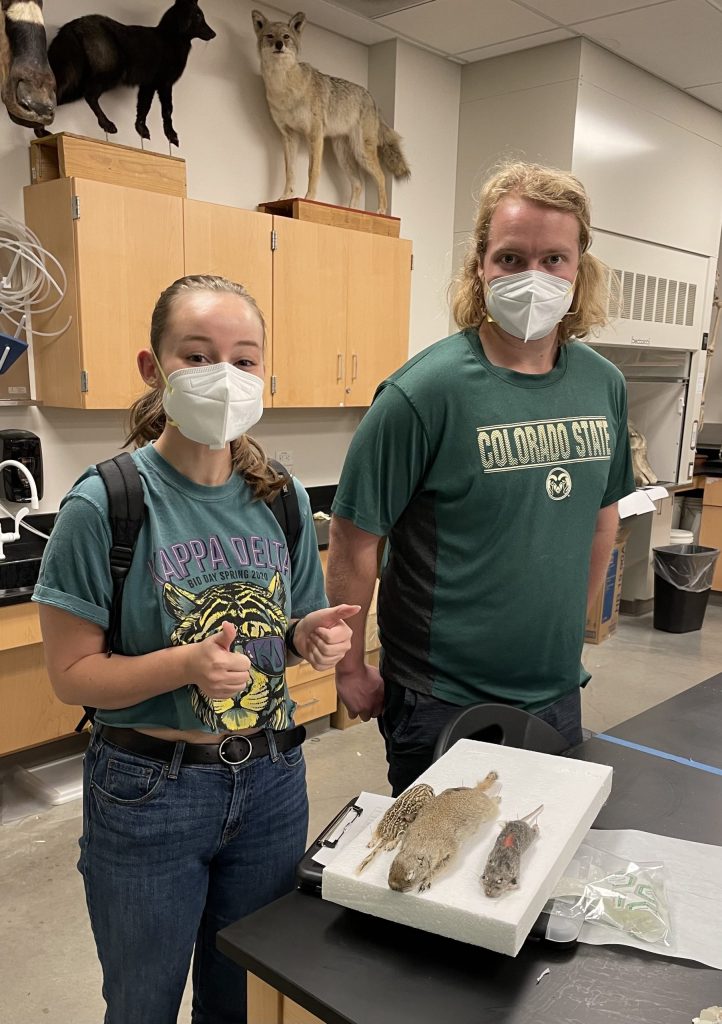
A successful specimen prep day! These ground squirrels are ready to be used for instruction in BZ330: Mammalogy. Keep an eye out for these specimens in our teaching collection.
Learn more about specimen prep here: YouTube | Museum Prep 101
Warning: The linked video explains the process of preparing museum specimens. The content may be considered graphic by some.
“Pursuing new educational frontiers” – by Allie Ruckman, Elements
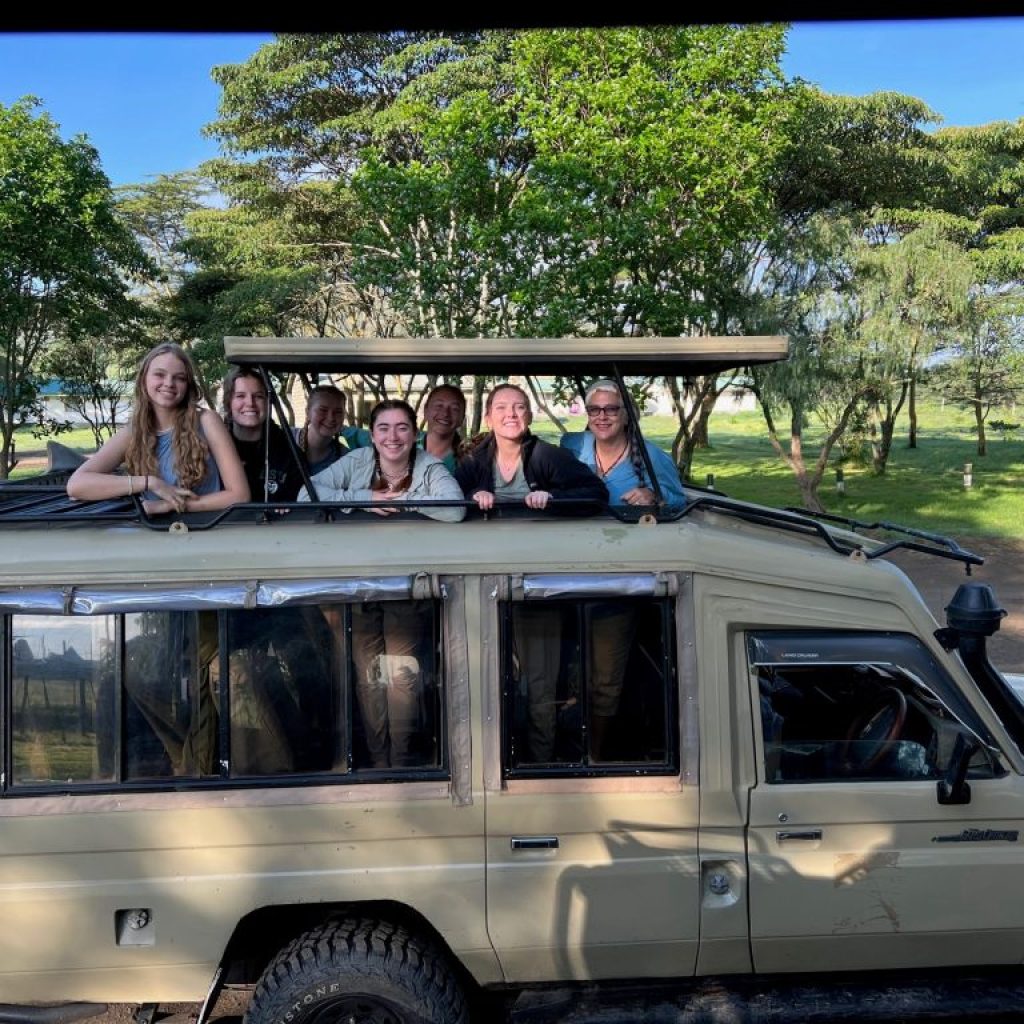
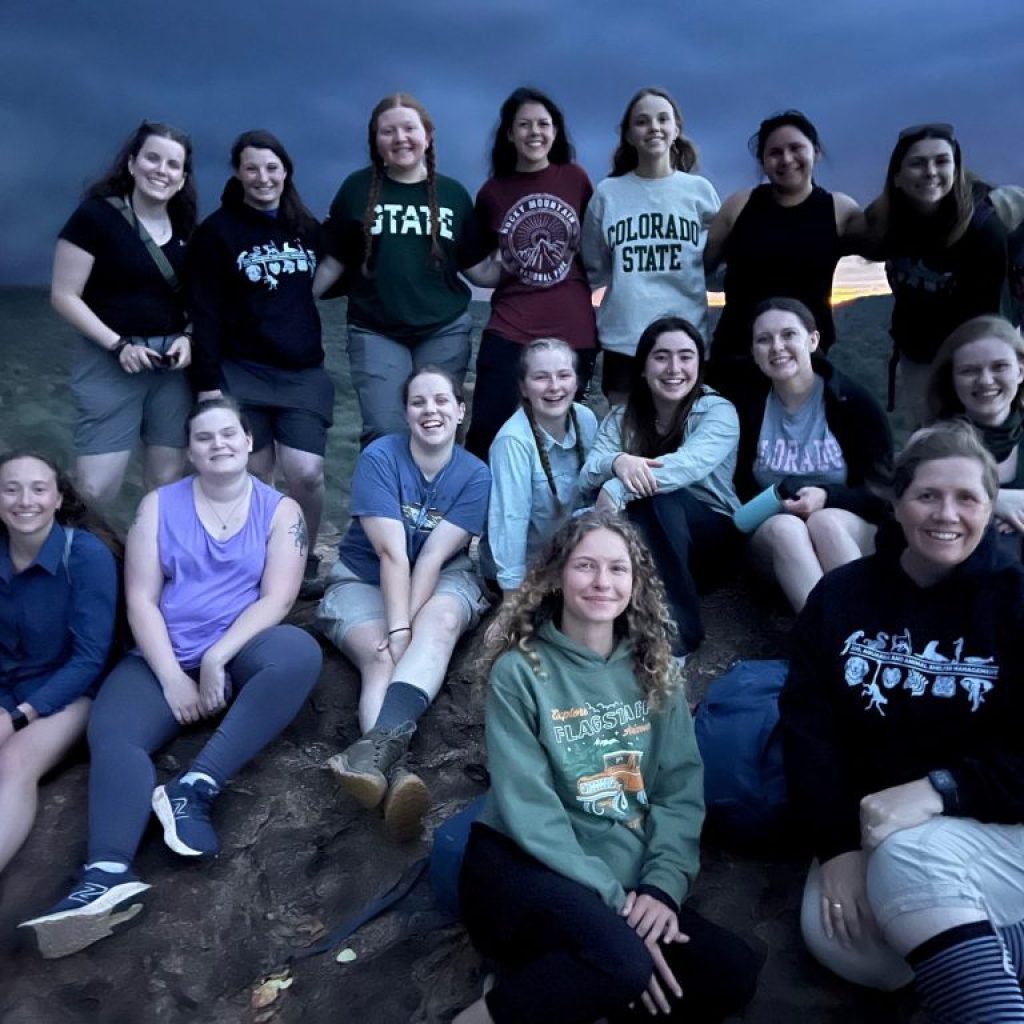
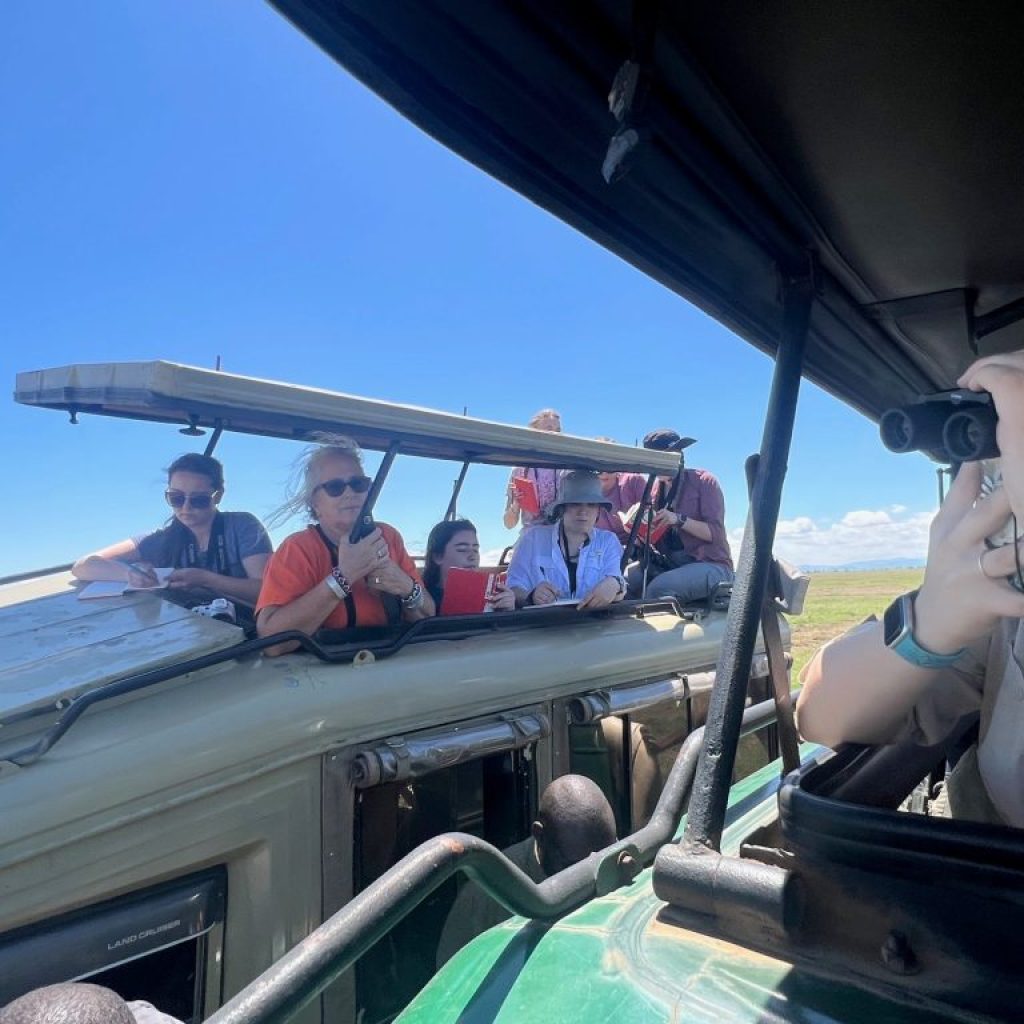
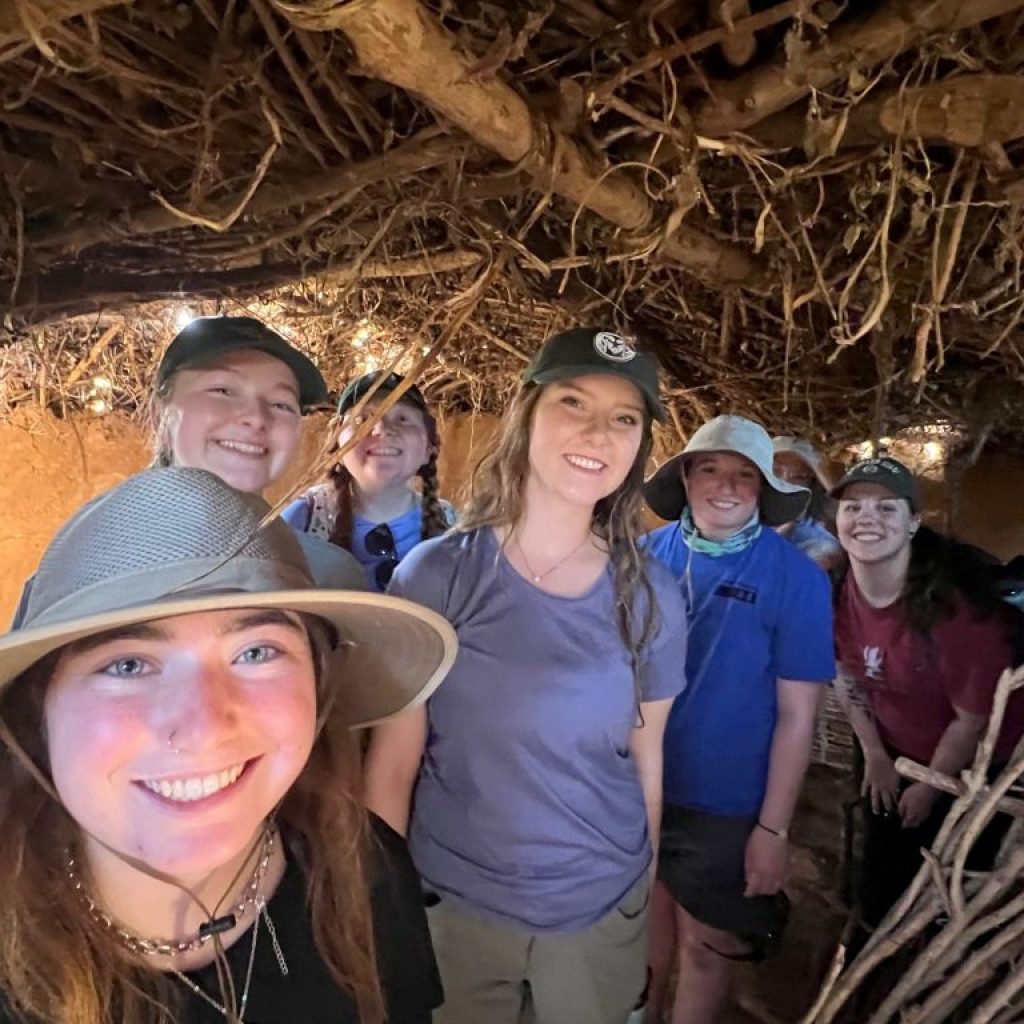
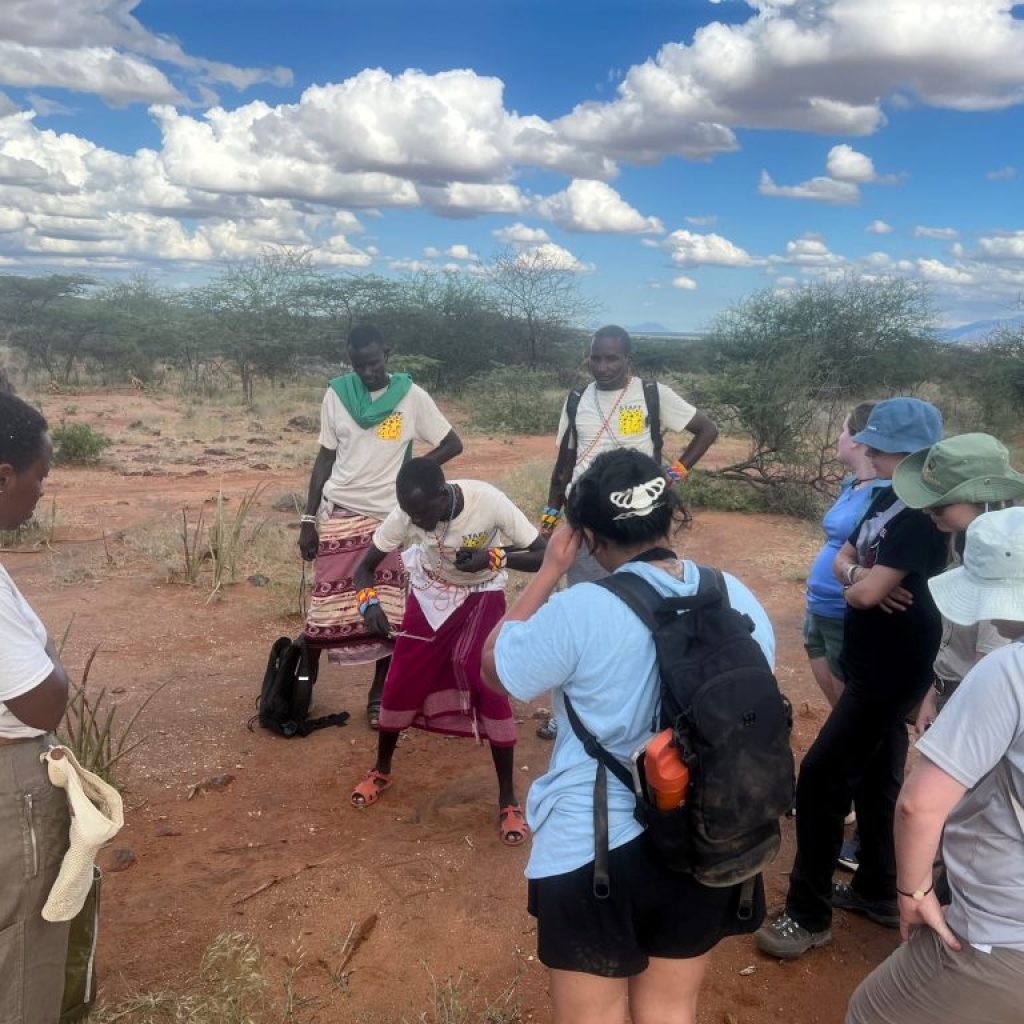
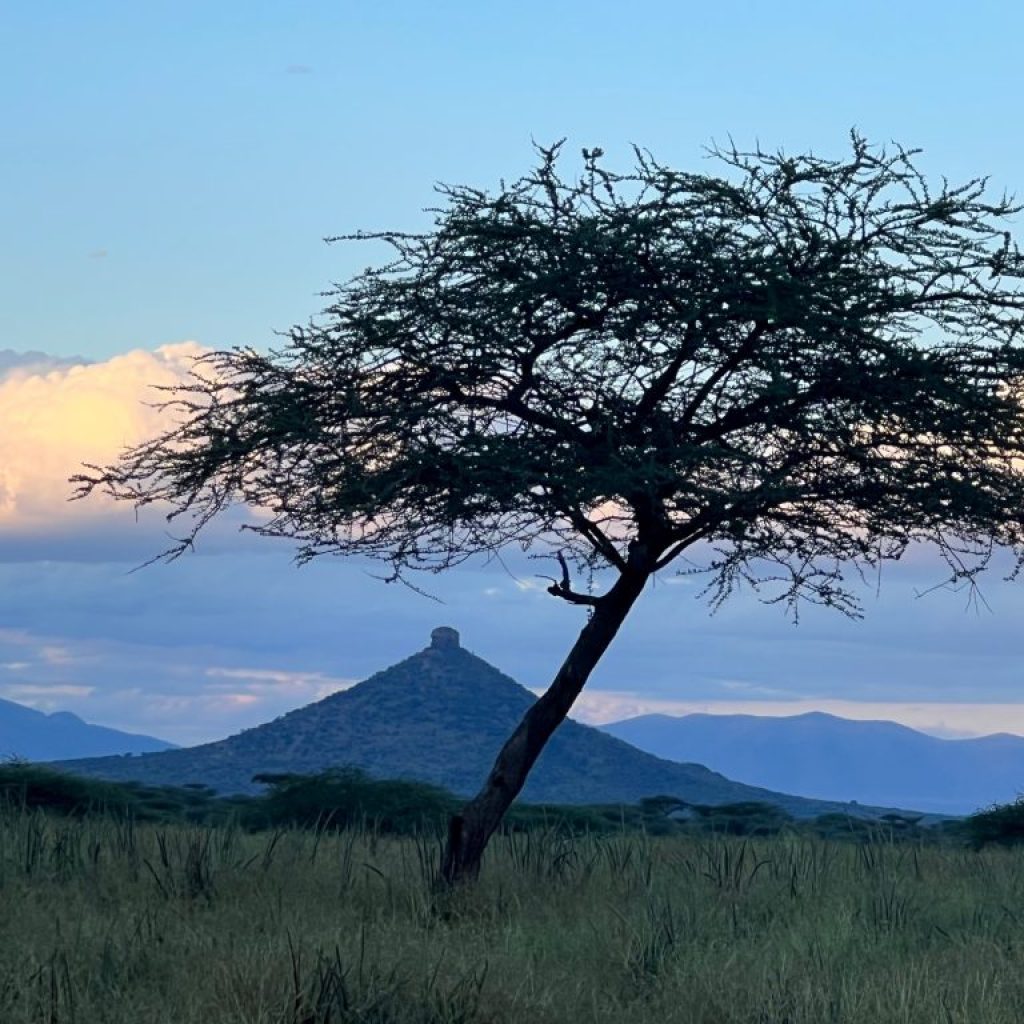
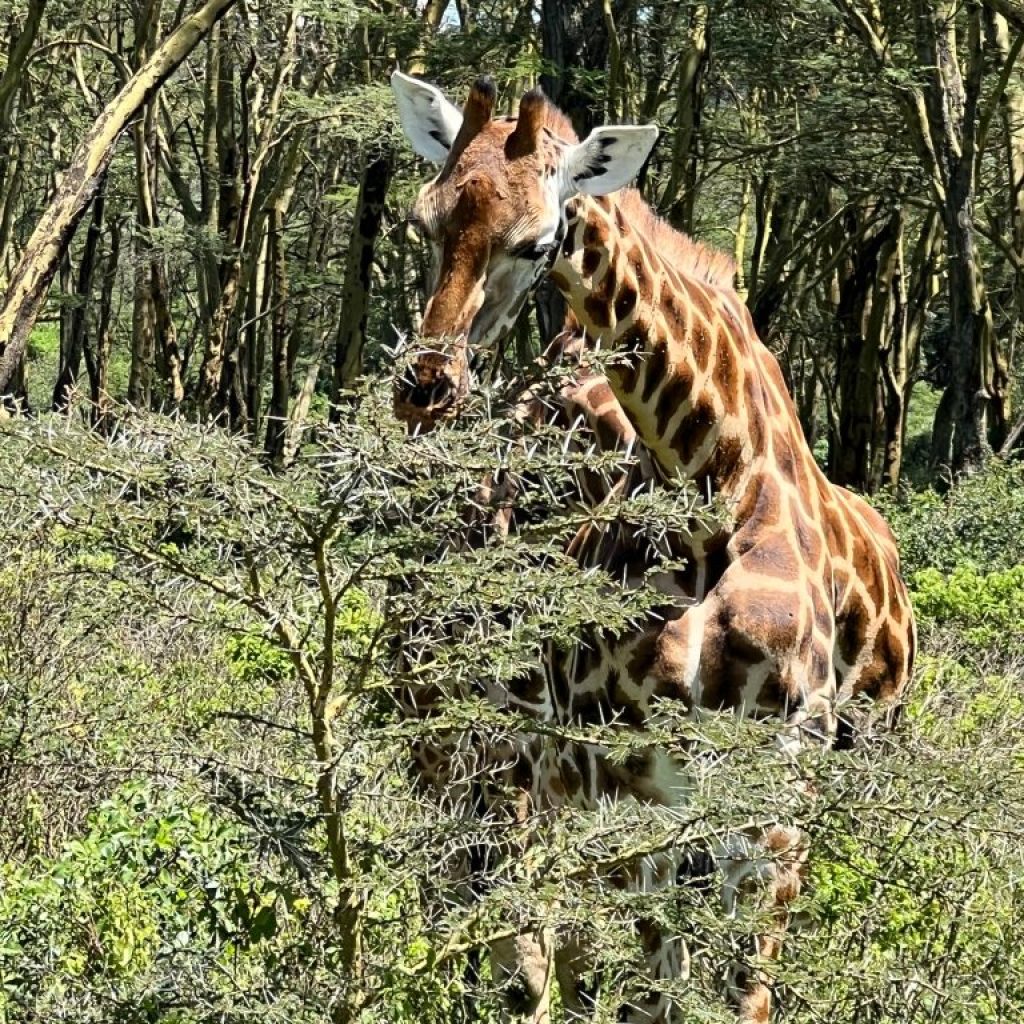
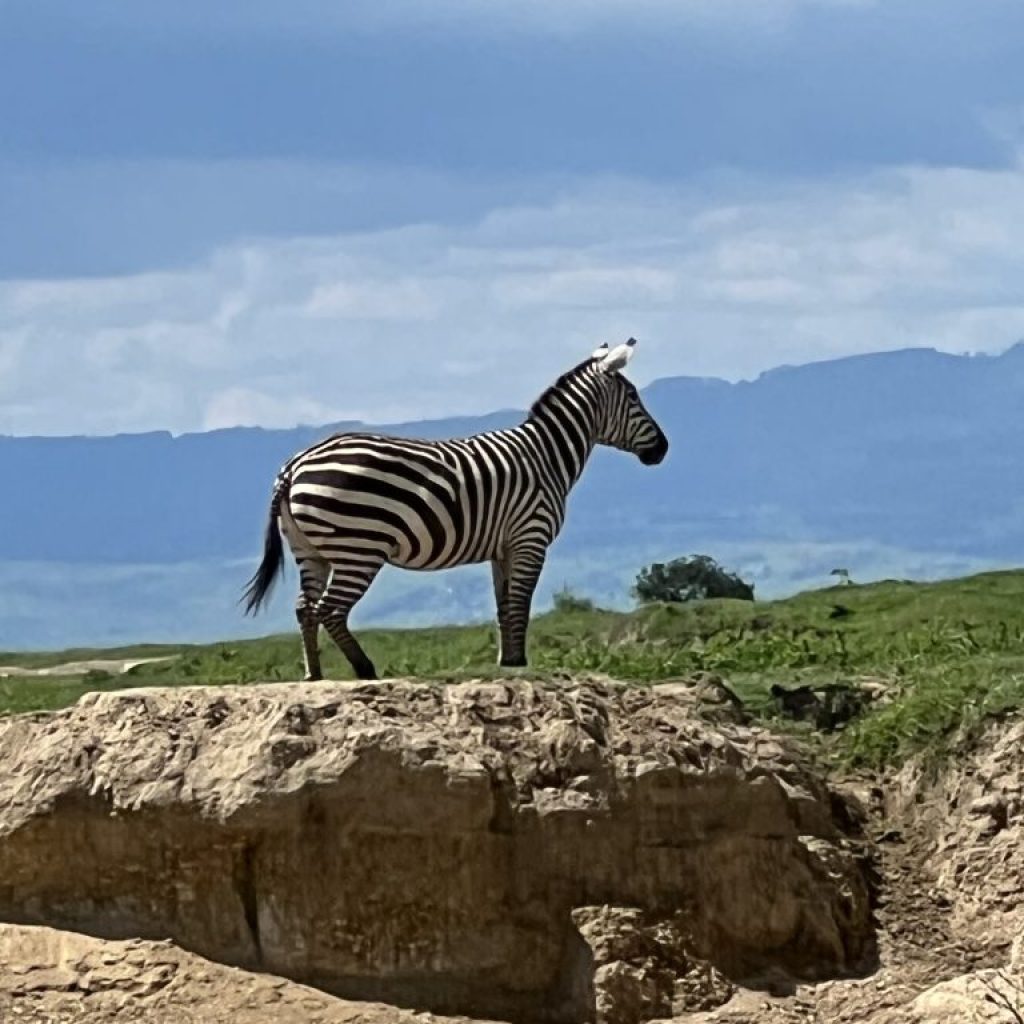
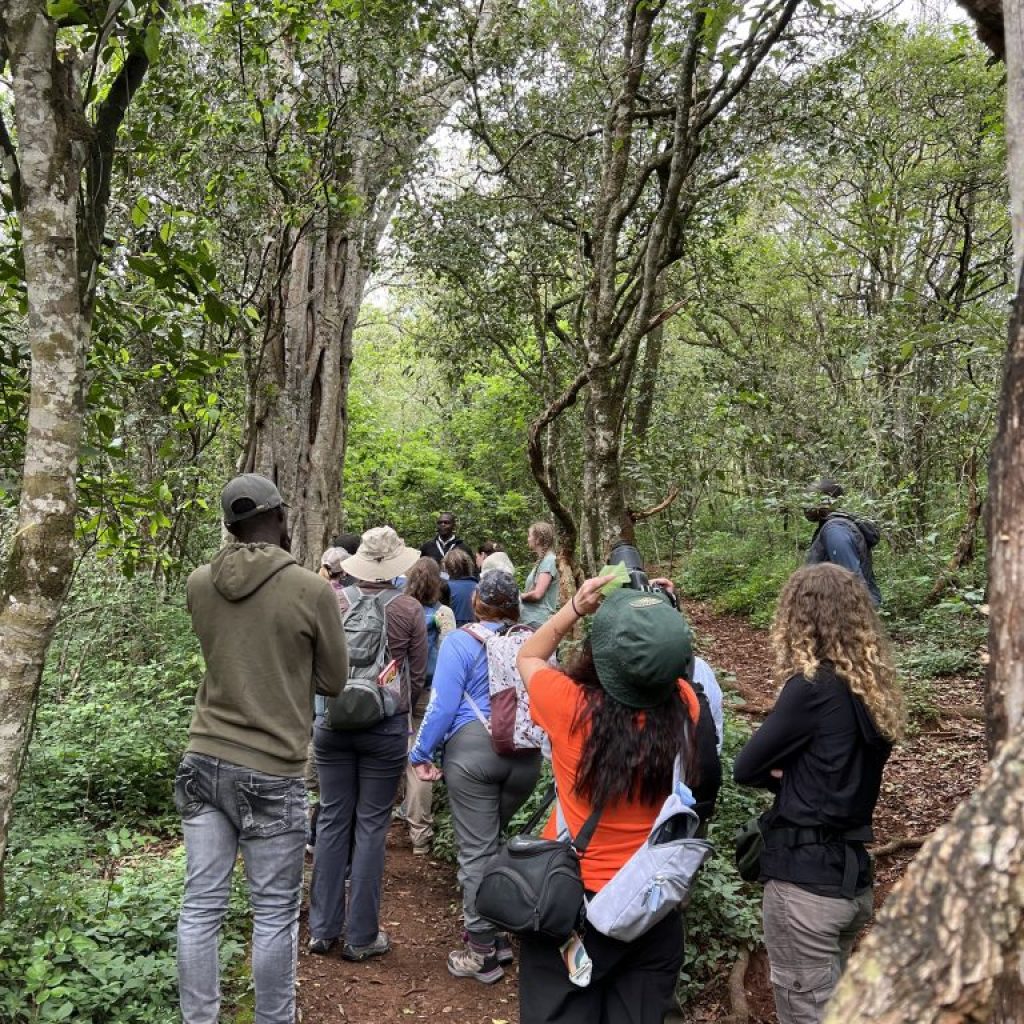
A brand-new course in the Department of Biology, Behavior and Biology of African Mammals, brought 16 students to Kenya summer 2023 to practice fieldwork and observational skills in an environment very unlike that of Northern Colorado.

Support + Resources
News
Trading places: Sue James, Melinda Smith swap roles in leadership transition
Sue James and Melinda Smith have spent years advancing Colorado State University through parallel leadership roles. Now, in a rare “trading places” transition within the Office of the Provost and Executive Vice President, these longtime friends are proving that stepping into each other’s shoes is the best way to move the institution forward.
Legacy lives on through moss donation
Holmes Rolston III, University Distinguished Professor and professor Emeritus in the Department of Philosophy at Colorado State University, is widely known as a founding father of environmental ethics as a formal study, but in his personal life he was known as a man with a deep interest in moss. Over the course of his life, Rolston collected approximately 2,000 moss specimens, which upon his passing, have been donated to the Charles Maurer Herbarium at Colorado State University.
Jan. 21 is National Squirrel Day: Learn fun facts about our favorite critters
In honor of National Squirrel Appreciation Day on Jan. 21, two CSU squirrel experts shared some fun facts based on their research.
Ecovoltaics: How solar panels benefit Colorado grasslands and achieve state energy goals
As a grassland ecologist, Colorado State University Distinguished Professor Alan Knapp is interested in how the study of ecovoltaics can not only help Colorado achieve its renewable energy goals but also improve the conditions of its grasslands.
Calendar
Features
Seminars
Find Us
DEPARTMENT OF BIOLOGY
Colorado State University
Biology Building, Room 111
1878 Campus Delivery
Fort Collins, CO 80523
Telephone: 970-491-7011
Fax: 970-491-0649
Email: CNS-Bio_Info@colostate.edu