Biology Directory
Full Faculty Directory
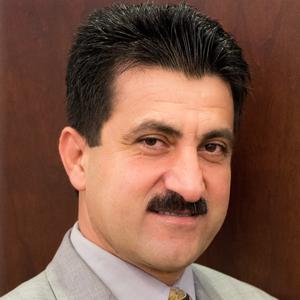
My research focuses on understanding the regulation of gene expression in response to abiotic stresses at the transcriptional and post-transcriptional levels including chromatin modifications, pre-mRNA splicing and small noncoding RNAs.
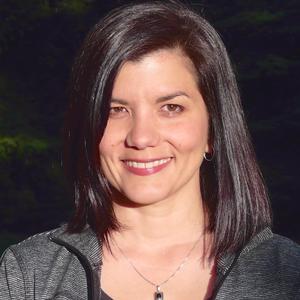
My research focuses on the evolution of animal behavior and the interface between animal behavior and conservation biology.

My laboratory group works on the effects of fragmented and patchy populations in evolution, genetics, and ecology. Currently, we study the epidemiology of plague in natural populations of black-tailed prairie dogs and other small rodents on the short grass prairies of north-central Colorado, and are part of the Laramie Foothills Chronic Wasting Disease Project, where we study the genetics of CWD in mule deer in relation to spatial epidemiology and genetics http://www.nrel.colostate.edu/projects/modelingCWD/.
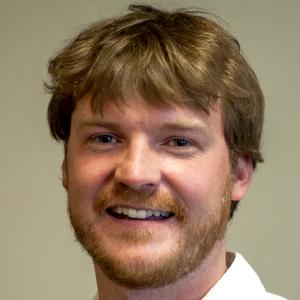
I am a microbiologist with a life-long interest in insect-borne diseases and ways to prevent and/or treat such diseases. My primary goal as an educator is to inspire in my students the same life-long passion for learning that I myself have. I strive to keep my students engaged both within and outside of the classroom and to instill in them an enthusiastic appreciation for the sciences (and an urge to continue learning more).
My research group studies how people make meaning of natural science concepts through reading, writing, and speaking. We use discourse and communication theories to understand how undergraduate students identify and resolve misconceptions. Most of my research centers on writing-to-learn and writing-to-communicate during problem-based cooperative group activities.

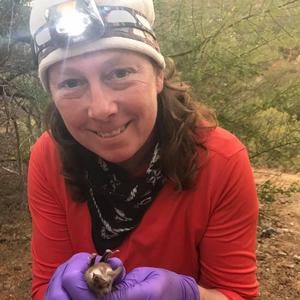
I am teaching intensive faculty at CSU and strive to incorporate evidence-based pedagogy and teaching scientific competency into every course I teach. I am also involved in improving the undergraduate experience at CSU through my work as Associate Chair of Undergraduate Studies in Biology, the CSU Assessment Council, and active involvement in TILT teaching initiatives. I am especially passionate about building resources that can be used in classrooms around the world, including Animal Diversity Web resources, open educational resources, and course-based undergraduate research experiences. I also have a special interest in building awareness of the role of museum collections in education, engagement, and research. Finally, my favorite place to be is in the field and I strive to find ways to provide hands-on field research experiences to students through teaching field mammalogy, managing research internships, leading a study abroad course in Ecuador, and leading student volunteers in research on the bat faunas of the CSU Mountain Campus and Poudre Canyon. I collaborate with colleagues around the world to study the species limits and spatial ecology of bats.

I am a landscape and molecular ecologist focused on conserving biodiversity in a period of rapid global change. My research integrates environmental, genomic, and phenotypic data sets to assess adaptive capacity and inform the management of at-risk species. My current research areas include integrating genomic data into the implementation of the U.S. Endangered Species Act and conservation genomics of imperiled amphibians.
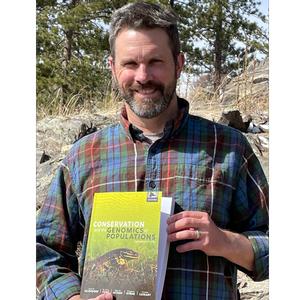
The Funk Lab strives to understand the evolutionary and ecological mechanisms that generate and maintain biodiversity, and how rapid global environmental change affects these processes. We address questions by integrating population genomics, quantitative field methods, controlled experiments, and computational analysis in a variety of taxonomic groups (amphibians, fish, stream insects, birds, mammals, reptiles, and terrestrial insects). Much of our research focuses on freshwater habitats, such as streams, rivers, ponds, wetlands, and lakes.

The embryonic heart begins pumping blood even before the cardiac organ is fully formed. Our group is interested in the genetic and biomechanical factors that contribute to normal heart development. We use the zebrafish model to study how the initial heart tube transitions into a rhythmic, efficient multi-chambered organ. Our approaches include quantitative live imaging, developmental genetic techniques, and modern genomic tools.
I am a disease ecologist and population geneticist with a passion for teaching. Classes taught at CSU: BZ 350 Molecular & General Genetic; BZ 220 Introduction to Evolution; BZ 212 Invertebrate Biology; LIFE 320 Ecology
My research combines my expertise in exercise and skeletal muscle physiology with molecular techniques to focus on oxygen metabolism; especially on the control and regulation of skeletal and cardiac muscle adaptations to extreme environmental conditions such as hypoxia. The ultimate goal is to enhance our understanding of molecular changes associated with hypoxia and translate these results for therapeutic applications in the treatment of myopathies.
Our group uses synthetic biology to study and create new biological systems both in plants and the creatures that interact with them, including viruses and fungi, to to create crops that are more productive, delicious, and resilient to the effects of climate change.
My research focuses on plants with a goal of understanding ecological patterns and processes from the leaf to the ecosystem level. Research is conducted primarily in the field utilizing the comparative approach and experimental manipulations of key ecological drivers. Areas of interest include: plant physiological ecology, ecosystems ecology, climate change, long-term ecological research, fire and herbivory effects on plants and ecosystems.
An ecologist with a joint appointment with the School of Global Environmental Sustainability. Courses taught include, BZ120, BZ220, BZ346, BZ348, LIFE103, LIFE320, ECOL505, GES101, GES520, NSCI660.
We work on Plant Synthetic Biology. Synthetic Biology is forward engineering of biological organisms for specific purposes both basic and applied. On the basic side, we are using synthetic biology to understand complex natural processes such as signal transduction and pattern formation. We are using synthetic biology to produce new types of plants and plant traits such as highly specific plant detectors, plants producing biofuels and plant that do useful things for humans and the environment
Our lab studies small non-coding RNAs and their roles in gene regulation and genome defense.
I am interested in three fundamental questions in evolutionary biology: (1) How do genomes evolve, particularly those at the extremes of genome size? (2) How do transposable elements shape genome biology and evolution? (3) How does genome size impact phenotype and the evolutionary trajectories of lineages?
I study the regulation of molting and limb regeneration in decapod crustaceans using molecular biological, transcriptomic, and proteomic methods. I am also Director of the University Honors Program (http://www.honors.colostate.edu).
I combine my interests in behavioral and cognitive ecology to understand the functioning of individuals and social groups. My research involves experimental work in behavior and physiology complemented by approaches based on individual based modeling.
I am an evolutionary ecologist interested in using a multidisciplinary approach to investigate how environmental variation and evolutionary processes converge to influence the patterns of demographic, genetic, and genomic variation in natural populations, especially those of conservation concern.
My research group studies the molecular mechanisms determining the outcome of plant-microbe interactions. We're especially interested in understanding immune receptor function and pathogen virulence strategies.
My primary interests lie in the fields of photosynthesis and algal eco-physiology. In particular, I’m interested in the diversity of mechanisms that algae use to protect themselves from too much light and other abiotic stresses.
My research interests are guided by the broad consideration of how ecological processes and patterns are constrained by habitat structure and environmental variability at multiple scales in aquatic ecosystems. Our results provide a basis for predicting aquatic community attributes at geographic scales and for ecological responses to land-use alterations and regional climate changes.
One of the fundamental questions in plant biology is how plants sense and respond to environmental (abiotic and biotic) and hormonal signals that regulate diverse cellular processes and various aspects of plant growth and development. Our group has been studying i) calcium-mediated signal transduction mechanisms with emphasis on calcium sensors and their target proteins, ii) mechanisms that regulate alternative splicing of pre-messenger RNAs in response to stresses, iii) disease resistance, iv) cell wall degrading enzymes for biofuel production and iv) synthetic signal transduction circuits in plants. We use molecular, cell biological, genetic, biochemical, bioinformatics and computational tools to accomplish our research goals. Arabidopsis, maize, potato and Miscanthus are used in our research. Studies on computational aspects of alternative splicing and protein-protein interactions are being done in collaboration with Asa Ben-Hur in the Department of Computer Science at CSU (http://www.cs.colostate.edu/~asa/projects.html).
My research is focused on ecological and evolutionary genomics in a changing world. I am co-director of the Bird Genoscape Project, a large, multi-institutional effort to use genomic methods to facilitate migratory bird conservation. As part of this effort we are addressing questions such as: 1) How are genetically distinct populations connected across breeding, migratory and wintering areas, 2) What is the role of migration in generating avian diversity? and 3) Which populations will have to adapt most to keep pace with climate change?
My research investigates the evolutionary forces that create diversity in genome size, structure, and function. I am particularly interested in the evolution of so-called "resident genomes" that exist inside the cells of another organism, including those of mitochondria, plastids, and other endosymbiotic bacteria in many insects. Much of my current work focuses on how these resident genomes co-evolve with the host genome.
My research focuses on understanding the consequences of human-caused global changes, especially the impacts of climatic changes, biological invasions, eutrophication (e.g., increased N deposition), and altered disturbance regimes for biodiversity and ecosystem structure and function. Within this context, my research addresses questions about the functional roles of species in ecosystems, the causes and impacts of loss and gain of genetic and species diversity, the factors that influence species coexistence and patterns of species abundance, and the relative strength of bottom-up (resources) vs. top-down (consumers) controls in structuring communities. My research employs a mixture of empirical approaches (observational, experimental, comparative and synthetic) and utilizes C4-dominated grasslands as experimentally tractable and dynamic model systems.

Joe studies how human and natural processes give the atmosphere its greenhouse gas composition, and works to generate science and policy associated with climate sustainability.
Biologist with a passion for teaching in mycology, botany and molecular biology.
My research focuses on how the interplay between ecological and evolutionary mechanisms affects the dynamics and persistence of ecological systems. We particularly focus on disease ecology and trait-based approaches in ecology and use quantitative techniques to address questions in these areas.
My research is taxonomically broad and highly interdisciplinary, spanning from molecular biology to ecology. My lab focuses primarily on systems characterized by high seasonal or inter-annual variability in resource pulses, with the goal of advancing our understanding of the mechanisms that underlie inter- and intra-specific variation in the daily and seasonal timing of vertebrates.
My research is focused on understanding how and why animals vary in their reproductive investment strategies. We study the proximate and ultimate factors that influence variation in reproductive function within mammals with an emphasis on gestational physiology. Our lab currently works primarily in deer mice to study flexibility and adaptive variation in the systems that contribute to fetal growth and litter size.

After teaching middle and high school science for 25 years, I am taking on a new challenge. I research how teachers use place-based education curriculum to teach ecological concepts.